Showing posts with label reflection. Show all posts

Tuesday, August 31, 2021

"I have never felt more welcomed into someone’s home in my life..."

Below is a blog post written by India Zietsman Donor Relations Manager in the Midwest Region - enjoy!

I started working as the Donor Relations Manager of our NPH USA Minneapolis office on March 9th, 2020. Even before that first day at the office, I dreamt about my first trip to one of our NPH homes. I knew that traveling was part of the job when I applied and it was a highlight of the job description for me. I value that NPH USA sends their fundraising employees to visit the homes so that we have a deep understanding of our work.  

During my onboarding, I spoke with numerous co-workers to learn all about my day-to-day work as well as the general mission of NPH. When coworkers spoke about our programs and kids, they lit up. They explained that there’s something intangible and indescribable that makes NPH truly special. Every co-worker would say, “When you visit a NPH home, you’ll understand.” 

My third day in the office, my boss Stephanie and I decided I would plan to visit NPH Guatemala and NPH Nicaragua during the summer of 2020. However, as we all watched the world shut down with the arrival of the pandemic, I knew my chances to visit a NPH home in 2020 were extremely low. 

Fast forward a year and a half. The United States is slowly opening up with the arrival of the vaccine. My co-workers are buzzing because finally, we are planning our first trip to a NPH home since the pandemic hit. And guess who’s on the list of attendees? ME! I truly screamed with joy when I found out that I’d be traveling to NPH Honduras in August 2021. I had watched all of the videos on NPH USA and NPH International’s YouTube accounts. I had read almost every article, webpage and brochure about our programs and our kids. I had learned as much as I possibly could from afar. After a year and a half, I’d be able to experience it all in-person. 

I have never been more overwhelmed with both joy and nerves at the same time in my life. A million questions came up: What did I need to do to prepare for this trip? Would the kids like me? Would the kids be excited to meet us? Would my Spanish (which I hadn’t used in 5 years) come back? And many more that I’m too embarrassed to admit in a blog post.  

We landed in Honduras at 3pm on a Tuesday and began driving to NPH Honduras, also known as the Ranch. Everyone who’s been to Honduras knows that driving there is slightly terrifying. Cars don’t just drive with a purpose there… they drive aggressively; constantly trying to overtake slower cars ahead of them on one-way roads. When we arrived at the Ranch, I think we were all grateful to be off the highway and inside the gates of the safe, gorgeous, calming property. We were also in awe of the enormous size of the Ranch. I got lost almost every time I walked around up until the last day of our trip. 

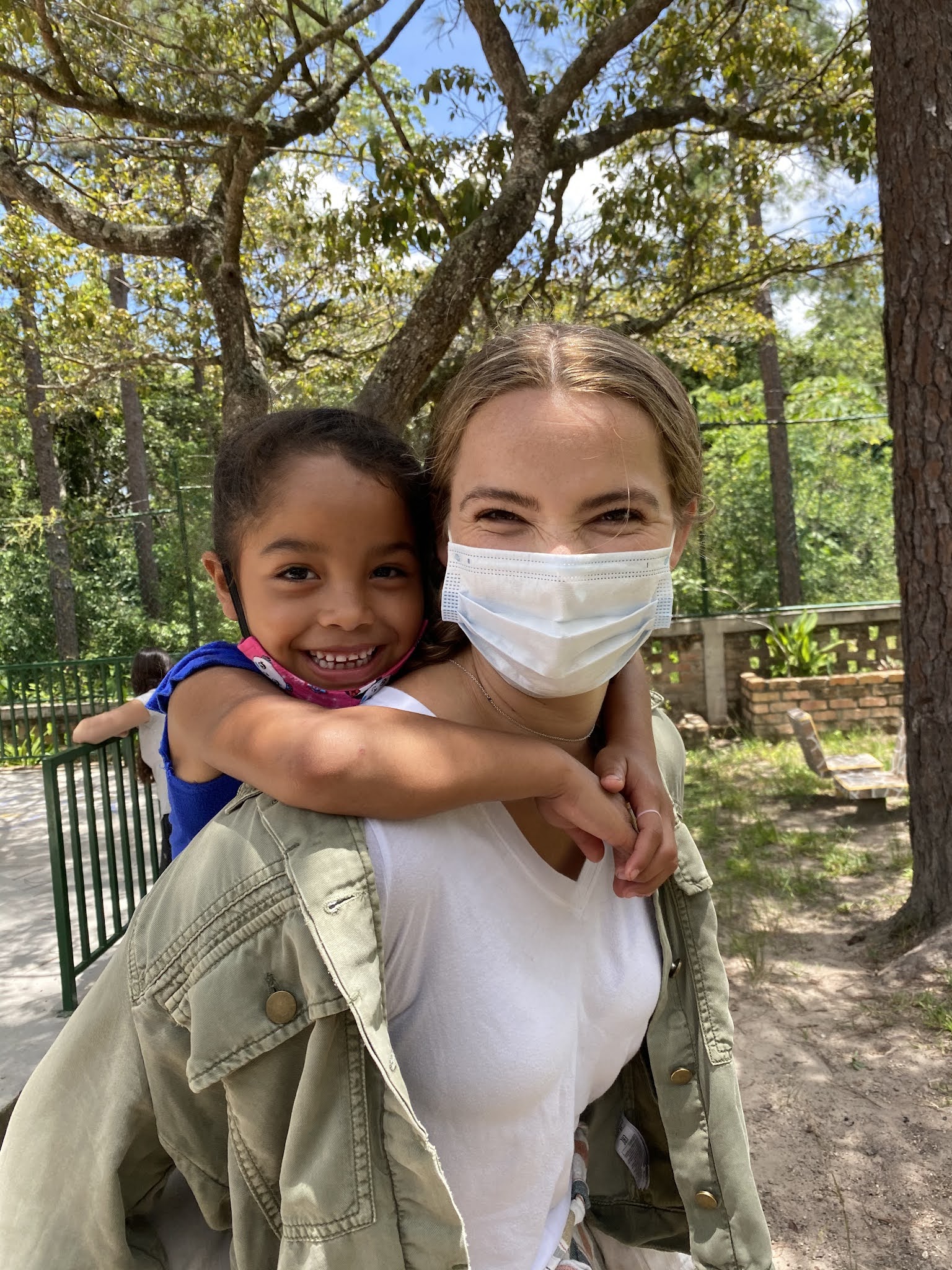
After three days of quarantine and a negative rapid COVID test, we could finally meet and spend time with the pequeños. Once again, my nerves and joy took over. I could feel myself shaking with anticipation. My first night with the kids, I had dinner with some of the older girls in their hogar, which is Spanish for “home”. When I stepped through the door, all of the girls ran up to me. They immediately gave me hugs, said “hello” or “hola” and asked me to come sit and eat with them. They were so excited to have me there and talk with me in my rusty Spanish. I have never felt more welcomed into someone’s home in my life. After dinner, they convinced me to dance and sing with them to American songs. I typically refuse to sing in-front of ANYONE. But looking into their eyes and hearing their pleas, I couldn’t say no. 

I walked back to the visitor’s center that night with the biggest smile on my face. My heart was overflowing with love for the girls I had met. They were all incredible. They immediately opened up to me – telling me about themselves, sharing laughs, and asking me all about myself. Now that I have had time to reflect, I recognize that I’ve never experienced anything like it in the United States. I was a stranger to these girls when I first arrived but left their home as a friend, as a member of their family. 

Hogar after hogar that I visited each day after that first dinner with the girls, I had the same experience. Kids running up to me just to offer a hug and say hello while I walked past the playground. Kids yelling my name as they watched me walk by their home. Kids sharing their passions and interests with me either through words or actions. I fell in love with all of them. I finally understood what my co-workers meant when they said, “When you visit a NPH home, you’ll understand.” 

I now have seen with my own eyes that NPH is truly unlike any other organization. NPH understands that every one of our kids is special and unique. While in Honduras, we were asked to describe NPH in two words. My words were holistic and human. I knew about our holistic programs before traveling to Honduras. I had read that they encourage our kids to be fully themselves, and that they have the power to empower. However, I only connected to the deep humanity of our work when I met our kids. Meeting them has given me a face to think about when I talk about our work. Today, I sit in my office and smile knowing that the work I’m doing is supporting them: those kids with beautiful dreams, incredible talents and huge hearts. 


Wednesday, October 28, 2020

The love that exists on the ranch is palpable, and I was lucky to have been there to experience it in person...

Below is a reflection written by Alec Helmke who volunteered at NPH Honduras earlier this year. Let's see what he has to say!

It’s been months since my unexpected departure from Honduras, which is truly hard to believe. Shortly after I returned, the idea of being “stuck” caught my attention. As I tried to stay up to date on news in Honduras, the same headlines seemed to pop up: “Massachusetts woman finally home after getting stuck in Honduras,” “Allen, Texas resident stuck in Honduras desperate to get out,” “Medical professionals back in U.S. after being stuck in Honduras.” As someone who faced an oncoming pandemic in Honduras and was aware of the under-resourced healthcare system in the country, I was certainly anxious to find a way back to the States. But was I “stuck?” And is this the type of language I want to use to describe my experience? Now, these may seem like unnecessary questions in a time where more pressing concerns abound, but the connotations of “stuck” are almost unquestionably negative: “My truck got stuck in the mud,” “She got stuck at a job she didn’t enjoy,” “He was stuck for hours in traffic.” Simply, people get stuck in bad places, and I want to change the narrative. Absolutely, I needed to leave Honduras—for the safety of the kids, my friends, and my loved ones back home. But I was never “stuck.” And now—in a time dominated by uncertainty and negativity—I want to focus on exactly the opposite. That is, rather than writing about the challenges, both physical and emotional, that I faced leaving early, I want to speak to the blessing it was to spend nine months in Honduras.

In hogar is where my NPH story must start. Spanish for “home,” hogares are groups of children who live together under one roof on the larger NPH ranch in Honduras. The hogar to which I was assigned, a group of boys between the ages of eight and fifteen, was named San Francisco. I may be biased, but I lived side-by-side with the best group of kids on the ranch and I cherish the connection I formed with each boy. My hogar became, fittingly, a new home for me—a place where I was able to center my experience at NPH. While the surgery center where I worked was a rapidly-changing environment, with new medical brigades arriving every week, San Francisco stayed the same: a place where I could go every night to spend time with the boys I cared about—playing games, joking, listening to music, working on homework, and so much more. The special moments we shared together have left an indelible mark on my heart. I’ll mention a couple that stand out to me. The pijamadas, or sleepovers, were always a great (although not exactly restful) time to share with the boys. The tios, or caretakers, would cook a special dinner, I would bring popcorn, and then we’d all spend the night on mattresses spread over the floor, watching movies until we fell asleep. It usually followed the same pattern too. First, within fifteen minutes, Teodor, the littlest boy in my hogar, would fall asleep. Then, the other younger boys. Then me. The older boys would wake up the next morning bragging about how late they stayed up, always making sure to mention the one or two movies they watched after I had fallen asleep. 

The work was hard, but, for some reason, I always enjoyed doing chores on Saturday mornings. Usually, we would spend a few hours using machetes to cut the grass around the ranch, and, let me tell you, learning to wield a machete is not easy! For the first few months, I would stand in awe as the boys, even the youngest ones, would whack at the grass for a couple hours, cutting huge swaths into the overgrown lawn. Meanwhile, I’d have to take a break after 30 minutes as blisters began to swell on my hand, barely having cut through a few feet. But, I always loved the chance to be with all the boys outside working together towards one goal. It was certainly a big change from what I was used to as a child, where Saturday mornings were reserved for cartoons and a nice, big breakfast! 

Memories abound. From trips to swim in the pond, to pizza nights, to simply the meals we shared—the time I spent with the boys in San Francisco will always stay with me. Nor will I be able to forget how I felt in the smaller moments: as the little boys sat nestled against my chest while watching a movie, as the older boys laughed with me during our conversations around the kitchen table, and as I walked home from San Francisco in the cool night air—absolutely drained of all energy, but filled with a sense of love and appreciation as I relived the joy I had shared with my little brothers that night. They say you can’t choose your family, and—although it may seem as though I chose to be a part of San Francisco by signing up to volunteer at NPH—that’s not the case. God put me in my hogar, and the boys welcomed me to be a part of their family, leaving me with a sense of gratitude I’ll never be able to fully express.

Honduras is an overwhelmingly beautiful country—from the pristine white-sand beaches and turquoise waters of Roatan, to the thick, verdant jungles surrounding Lago de Yojoa, to the roaring, orange-tinged waterfalls near Valle de los Angeles, to the simple, yet awe-inspiring vista from the peaks just above the ranch—but I digress… The most beautiful part of Honduras, and of the ranch itself, was the people I encountered. Of course, the boys in San Francisco are the cutest ones on the ranch, but there are a bunch of other great kids too!

I always had a lot of fun during activities, which brought together pequeños from different hogares so they could spend time with one another as brothers and sisters. There were movie nights, where I could usually expect one or two younger kids to use me as a pillow as they crowded around the projector screen in the brisk night air. There were dances, where—if I wasn’t showing off my killer moves—I was dancing with some of the pequeños or playing tag with the younger kids who didn’t want to dance. There were plenty of soccer games too, and—from my very first game on the ranch, where a girl kicked me square in the face with a soccer ball, to my last game, where the boys seemed to score on me effortlessly—I never seemed to get the hang of the game. Celebrating holidays together was a special treat, and I remember New Year’s Eve especially well. During the day, I made a new friend: a little seven-year-old girl, who—no matter how fast we had to run nor how long we spent searching for clues—held my hand for the entirety of the ranch-wide scavenger hunt. Later that night, as I sat near a crackling bonfire, I was surrounded by a group of some of the youngest boys on the ranch, and we laughed together right up until the fireworks were launched at midnight. Between the embers of the fire, the fireworks, and the smiles on the boys’ faces, I really can’t say which shone the brightest. 

And there were little joys of living with the kids on the ranch too. I always loved weekly mass with the pequeños, even though it might not have been the most solemn religious experience. In no other church have I felt the same spirit as I did sitting on the concrete pews among hundreds of kids. Sharing the sign of peace was an especially beautiful moment for me, as the hugs and smiles always filled me with a sense of happiness and belonging. The songs we shared were beautiful too. They weren’t always in tune, but they were always filled with a sense of joyful energy that was unique to the ranch. This same energy was infused in almost every conversation I had with pequeños, as the kids breathlessly shared their excitement about an upcoming activity, asked me about their friends and siblings on other sides of the home, or joked with me about daily life on the ranch. This spirit of excitement extended to even the youngest of the pequeños. As I walked home with another volunteer from a long day at work one afternoon, I recall passing by the chiquitos: the toddlers who lived on the ranch. When we turned the corner and came into view, a happy noise shot up among the little ones. And, before I knew it, one of the chiquitos was waddling towards us, his little belly bouncing as he awkwardly tried to navigate the bumpy path between us. He reached up, his arms extended towards me, and I wrapped him in a great big hug. As I joked about taking him with me back to the volunteer house, hoisted him over my shoulder, and took a few steps in that direction, I could hear his little laugh wash away all the challenges of my busy workday. 

The love that exists on the ranch is palpable, and I was lucky to have been there to experience it in person. The laughter, the smiles, the hugs, the hundreds of personal connections I’ve made with these kids—all of it has left a mark on my soul. So, what more can I say? I could continue reliving countless memories and describing more of the incredible people I had the privilege to meet in Honduras, but I think it’s time to get to the point of this story, that is, to say thank you. And since words will never do the sense of gratitude I feel justice, I’ll keep it simple. Thank you to every boy in my hogar for filling my time in Honduras with joy and for blessing me with a new family. Thank you to the children of NPH for welcoming me and for offering me memories that I will cherish for a lifetime. Thank you, Honduras, for letting me witness the beauty of your landscape and your people, and for letting a chele feel like a catracho for just a little while. And thank you God, for nine months that challenged me, shaped me, enlightened me, and filled me with an irreplaceable and unforgettable sense of joy. 

I was never “stuck” in Honduras, not even at the end. Every moment I spent in the country was a blessing, even the difficult ones. And the deep connections I have formed at NPH mean that the space Honduras fills in my heart certainly doesn’t match the space the country fills on a map. No, I was never stuck in Honduras, but Honduras will stick with me forever.


Sunday, April 19, 2020

I wanted something to last longer than my time here at NPH...

Sophie Herman has provided much help and support to our home in Honduras during her time volunteering there and she is a grateful recipient of our Hightower Kloos Legacy Fund for international volunteers. Below is a lovely reflection from Sophie that speaks to the true spirit of NPH - care and giving back. Thank you to Sophie and ALL our amazing international volunteers for being a part of the NPH family and for donating their time and energy to have such an incredible and positive impact on the lives of our children.

With the  Hightower Kloos Legacy Endowment I received, I have been able to greatly impact my hogar at the NPH home here in Honduras. With the money, I had many options and ideas of what I could do. I wanted something to benefit the children with disabilities and I wanted something to last longer than my time here at NPH. With many meetings with coordinators and fellow employees on the Ranch, I decided to start a caseta, or a little store, to help raise money for the special needs hogares, or homes. This way there is always a source of income for the hogares/homes which need money or donations, and it is something that could be continued on even after my year of service. Not only does the caseta provide funds for the hogares, but also it provides a work opportunity for the kids with disabilities who are able to participate and work. 
 
I was given an old, abandoned caseta-type building from the hogar coordinator and I got right to work to fill it with needed supplies and equipment. The biggest expense and where most of the money from the scholarship went was to buy a freezer. With the freezer, I am able to help the kids with special needs to make paletas, or popsicles, and charamuscas, which are little bags filled with juice that you freeze. I also bought kitchen supplies such as a blender, electric water heater, measuring cups, utensils and more little things that were needed to make all the treats that the caseta would sell. The last thing I bought with the scholarship money was products to fill the caseta, such as Pepsi products, popcorn, hot chocolate, coffee, chips, cookies, juice, lollipops, and other treats that the kids on the Ranch request. 
 
Just 4 months into the project, I was able to raise 7,000 Lempiras, which equals about $280 US. While this may not sound like a lot to make in 4 months, money here in Honduras is stretched a lot further and I have been able to buy many important and fun things for my hogar. With this money, I have been able to provide much needed shoes and shirts for the boys in my hogar, a water dispenser, a blender, and a hammock. As we continue to make more money and as my hogar´s needs are fulfilled, I will go to the other special needs hogars to ask them what kind of donations they are looking for and what will help the kids as well as the tios and tias. I am excited and super happy to be able to provide funds and donations to the kids on the Ranch who do not usually receive this kind of help, and I could not have done it without the money from the  Hightower Kloos Legacy Endowment. This money is really making a difference in the lives of the children with special needs and I am happy with the current success and the future progress of the caseta.


Monday, January 6, 2020

Everyone in Haiti lost someone...

Below is a blog post by Rachel Prusynski, who in 2010, was visiting her friend Molly Hightower who was volunteering at the NPH Haiti home when the devastating earthquake hit. 

I was only supposed to visit my college friend Molly Hightower who was volunteering at NPH Haiti. On the 10th day of the trip, an earthquake of 7.0 Mw rocked the Caribbean country. It changed my life forever. 

My first trip to NPH Haiti: As well as visiting Molly Hightower, who was mid-way through her volunteer year at NPH Haiti, I was considering volunteering for NPH after finishing my doctorate in physical therapy and wanted to see what the volunteer experience was like. Molly and I became close friends while studying at the University of Portland in Oregon. After spending a lovely time in Haiti with Molly and her fellow volunteers through helping her at work at St. Damien’s hospital as well as spending some time traveling around Haiti, the earthquake struck. 

The moment it struck 

I was on the top floor of the Father Wasson Centre, a 6-story building in Petionvile where the volunteers lived and where NPH had offices, day programs for kids with disabilities from the community, and an event space. I was sitting in the lounge area next to Ryan Kloos, who was visiting his sister Erin, another volunteer. Erin and Molly were both downstairs in their rooms showering after our trip to the market. One minute, Ryan and I were checking e-mails, and the next I remember, I was on my feet scrambling as the floor tipped sideways. There was no time to react, and I was buried as the entire building crashed down, our top floor pancaking on top of the floors below. Unfortunately, both Ryan and Molly were killed. 

I was pulled from the Father Wasson Centre by strangers who I believe were involved with NPH who drove me to the US embassy that night. I was evacuated to Guantanamo Bay Navy Hospital due to my injuries, and was back in the US within a few days after negotiating a flight to Florida. I was injured and unable to help immediately in the aftermath, and as a visitor unfamiliar to Haiti I likely wouldn’t have been very helpful, but I ached to help and felt disconnected from everyone struggling in Haiti, especially considering my only connection to Haiti had died with Molly. 

Because of the strength and destruction of the earthquake, everyone in Haiti lost someone. 

Supporting NPH in the Aftermath 

I returned to Haiti for the one-year anniversary of the earthquake and was graciously hosted by Molly’s former boss and colleagues and have returned for multiple trips since, both training physical therapy technicians and nursing students at the St. Luke schools and hospital associated with NPH as well as the Kay Germaine program for youth and adults with disabilities. 

I also had the opportunity to establish a university scholarship in Molly’s honor at our alma mater. Two young adults who grew up at NPH Haiti have now successfully completed their bachelor’s degrees at the University of Portland on a full-ride scholarship. 

I have seen our NPH programs in Haiti go through many changes in recent years, with the initial Father Wasson Angels of Light program borne in acute response to the quake shifting to a more permanent program. I have continuously been impressed by the quality of care at St. Damien hospital, with the addition of the pediatric residency program and expanded oncology service lines, among other achievements. The Kay Germaine programs have expanded to serve adults with neurologic impairment, a huge gap in rehabilitative care present even before the earthquake. I also sponsored a young child who was left at the NPH home after the earthquake and he is now turning 18; we have communicated for almost 10 years and I am extremely proud of his compassionate nature and drive. 

10 Years Later 

Staying connected to NPH was essential for my personal recovery after the earthquake. Having an outlet for some of my survivor’s guilt and my desire to help as well as a connection to the NPH community makes me feel like part of a family and continues to give me purpose. I founded the first Associate Board of young professionals for NPH USA in the Northwest. Through the years, the Associate Board has been responsible for raising thousands of dollars and energizing young donors through many community events and child sponsorships. I now serve on the NPH USA Northwest regional board and continue to support NPH Haiti. In terms of the two university scholarships, I got to be a part of the students’ support team as they went through college here in the U.S. and am lucky to consider both of them as family. I know that when I look back on my life in years to come, my role in their journey and their place in my family will be one of the biggest points of pride and love in my life. 

I was hoping to be in Haiti with the NPH community for the 10th anniversary of the earthquake but cannot, in good conscience, be a burden to them at this time. NPH Haiti is struggling against the daily challenges of keeping the home and hospital running amidst gas and transportation shortages during the current political crisis. The NPH Haiti staff are competent and courageous people and I will continue to send them as much financial support as I can manage, especially during the worst crisis Haiti has faced since the earthquake. Considering they have faced the cholera outbreak and multiple hurricanes since 2010, the fact that this current systemic unrest has even more negative impacts on our operations and poses more uncertainty for the future is a testament to the massive challenges our staff face daily in order to provide care for the vulnerable families we support.


Monday, November 4, 2019

This trip opened our hearts in a whole new way...

Below is a reflection from Tomasina Lucchese who visited the NPH home in the Dominican Republic this past summer with St. Julia's Parish from Weston, Massachusetts. 

It’s hard to believe we’ve been home from the Dominican Republic for over a month now. As we continue with our summer activities, thoughts of our trip continue to pop into our minds. Often one of my kids will burst into laughter, recalling a funny story. A few times someone has made an astute observation or comparison, sparking a sometimes difficult, but always worthwhile conversation. And regularly, one of us will mention a child from the orphanage - somehow affirming our connectedness to him or her. These connections are now deep within our hearts. The friendships we made with these children are what will keep our experiences alive.

So many of our friends and family have asked us ‘how was the trip?’ It is just so hard for me to put it all into words, because there were so many experiences all rolled into that one week. But for me, the word that I go back to is “grateful”. I am first and foremost grateful that I had the opportunity to experience this as a family. Grateful that NPH exists – we were so impressed with this organization and the care they give to each and every one of their “pequeños”. Grateful that we were welcomed with wide-open arms, allowing us to become part of their family with such ease, if even for a short time. Grateful for the warm and exuberant Dominican culture and people. Grateful for the kind, optimistic and fun group of teens and adults we traveled, worked and played with – we now have an entirely new group of friends. And as a mother, I am grateful for my children’s curiosity and willingness. They were open to every experience put in front of them without hesitation (and for the most part without complaints!). They were all in. Jude, Anna and Violet each loved this trip for their own reasons … and are all asking when we can go back.

Much to our surprise, by the time we arrived in June the pequeños were already on summer break and we happened upon their graduation week. Therefor our chores were more sporadic than expected, so we could participate in the end-of-the-year festivities. I came to see this as a gift. Not because we’d forgo some of our very hot, outdoor chores, but because we really got to be a part of the family. Celebrating with them, allowed us to get to know the children better. We celebrated their achievements and milestones, the way we would at home with our own children. The older children (some of them young women and men now) informally mentor the younger ones in their casas and school – the NPH program is designed this way to build responsibility and unity. And this came alive during the graduation activities, where all ages were celebrated, teaching, building trust, and outlining the expectations and goals for achievement. The baccalaureate mass brought me to tears, as I was so touched by the depth of their relationships. It was easy to witness the love between the priest, teachers, sponsors, “aunties” (the women who live in the casas with the kids), and each of the children. Although a good majority of these children are growing from trauma-ridden pasts and are without families in the traditional sense, they are now fully embraced in a loving, encouraging and safe environment. It didn’t take long for Jude to comment that “these kids were the lucky ones, to be living at NPH.” They had what they needed and were well cared for. Each child had tasty, nutritious food, his or her own bed, clean clothing, means to solid healthcare and education. But just as important, each child now has a strong family, filled with love and security, predictable schedules, expected chores and behaviors … exactly the way Jim and I have tried to cultivate our own little unit here.

Now I’d be lying if I said it was all a breeze. The tarantulas and bugs definitely pushed us out of our comfort zone. The nights of unforgiving heat were like nothing we had ever experienced. But through it all, we were always able to find gratefulness; like how my and Jim’s bunk bed didn’t collapse, even though it was held together by a coat hanger. Recently while making a tomato salad, I thought about how in the garden for hours I peeled and prepped onions to be sold at the next market, and how my fingers smelled ripe for what seemed like days. I smile thinking of how a few bright-eyed boys showed Anna and Violet how to climb so far up, to score the cherries that were too high for anyone else to reach. And how Jim and Jude got the toughest job of moving rocks around the papaya and mango tree trunks for improved irrigation. None of these baby trees were tall enough to provide even an inch of shade and as a result, I have never seen a crew so sweaty! Every evening I went to bed content with a sense of amazement as I replayed the day’s activities in my head – in awe of our little group’s ability to blend so effortlessly with the Casa Santa Ana family. This was God’s hand at work. Exactly how our blended world should be. I loved how all the children, ours and theirs, connected over old-fashioned hand games. Some enjoyed soccer and sports to pass the steamy afternoons, while singing and drawing suited others. There was a lot of hair braiding and some card playing, lots of jokes and even some pranks. Nobody was ever bored. And it was this familiar play that broke down any language hiccups and cultural differences. Our play time spent with the children allowed the very busy “aunties” time to tend to the endless to-do list of any busy home - clean the casas, wash and hang clothes, tend to scraped knees and sibling squabbles. And the pequeños relished the attention. It was all beautifully genuine. We were one, there together, with the gift of time. Our shared joy came from simply spending time together. It reminded me of how simple life can be and my summers as a child spent in Italy. My heart will always swell with the images of Anna and Violet in the midst of post-lunch girl dance parties, Jude being followed by his two little buddies in hopes of a pick-up game of whatever their found ball-type would offer, and Jim’s shared drum session at the graduation dance. There are just too many great memories of the pequeños to list, all leaving imprints on my heart. I promise to always lift these kids up in prayer, as I do my own, and now including all the orphaned, abandoned and disadvantaged children both near and far.

I can’t end this without stating the obvious; I am feeling grateful too that I happened to be born on this little patch of earth and all the opportunities that come with it. I am grateful for the blessings I’ve had all my life, and for the opportunities I have to try to give back, even though my efforts are a mere drop in the sea of need. But it is experiences like this, that change our lives, open our minds and hopefully our attitudes as we go through our daily routines. In reality, the cost of our trip helped advance NPH’s efforts with the children’s homes, hospitals and programs. But now I see that a large part of their effort is bringing people and cultures together, making the world just a wee-bit smaller, shifting our lens from tolerating differences to experiencing our sameness – creating connectedness. To use the words my friend Mara offered me when I returned home, this trip “opened our hearts in a whole new way”. And for that, I am most grateful.


Monday, September 30, 2019

"Lessons Learned During My Visit to NPH Honduras"

Below is a blog post written by Gail Taylor, NPH USA's Northwest Regional Board Chair!

I was fortunate to visit the NPH Honduras ranch for the first time with 22 children and adults from the Northwest this past July. Before the trip, I’d heard dozens of first-hand accounts that NPH changed their lives. I had high expectations.

My favorite morning was spent with first graders in Montessori class. We attended open air PE class, where they laughed at my limbo efforts. We snacked on oranges, then went inside. The pequeños kept quiet and knew what to expect. At tables, the assistant teacher handpicked flash card sets, tailoring the exercise to fit each student’s reading level. They wanted me to watch them read their flash cards. One boy began writing in his writing book. I sat with this precious boy as he wrote. Next, the teacher gathered the pequeños by the bulletin board where she taught Spanish.

The first moment I decided NPH Honduras is better than advertised was when I was looking around the perimeter of the classroom and I saw a red concrete-like floor, faint green walls and high ceilings. I focused on the Montessori style stations, equipped with wooden shelves of library books, blocks, abacuses, flags, flashcards, writing books. Maps, posters and children’s art hung on the walls. The variety of materials appealed to sensory, visual and auditory learning styles. The stations incorporated math, Spanish, English, reading, writing, religion, geography, history and biology. This classroom wasn’t as pretty or new as the Bellevue classrooms I’ve seen. But it functioned effectively. This classroom was equipped to help these pequeños develop order, concentration, coordination and independence. Both teachers had a tighter grip on the pequeños’ attention than I saw in classrooms at home. That was the moment I realized my high expectations of NPH were exceeded. These pequeños are getting a good education that will serve them years after they depart the ranch.

Other lessons I learned:

  • It is possible for hundreds of children to be happy and well behaved at one time. I saw the effects that love, caring and acceptance have on children who once struggled to survive. I saw children play, study and do chores. It was heart-warming to give hugs and watch youngsters jockey to hold my hand, ask me to blow up their balloons and give high fives. 
  • NPH always has a good reason. Our travel group did not always understand a few shortcomings and rules at first. But NPH staff answered our questions and justified their priorities and allocation of resources. The extra services we wished could be offered were unavailable because of financial constraints. 
  • NPH’s programs have a deeper and more lasting impact than I had understood. Every NPH graduate gives back through a year of volunteer service. But I did not realize 20% of the current staff grew up at NPH because of donations during the 1980s and 1990s. I met an impressive sample: the head Montessori teacher, her husband, another teacher, a lawyer, 2 doctors and 2 alumnae from our Seattle Leadership Institute Program. 
  • Daily operations and programs allow each of the pequeños an opportunity to achieve his/her potential. Preschoolers and elementary students learn the Montessori method. All pequeños lead an orderly life with responsibilities of homework and twice daily chores. Children receive vocational training that will lead to a well paying job. Those who are capable can attend a university. Medical needs are met with a state of the art medical clinic and surgery center affiliated with NPH. Special needs pequeños receive individualized attention. NPH offers an alumnae network office where alumnae seek practical job-hunting help and emotional support.
  • Vocational training programs and resources do double duty by fulfilling current needs. Pequeños from the NPH cobbler shop make all school shoes, and the shoes are impressive. Pequeños from the tailor shop create all school uniforms. Workshop trainees help maintain the facilities. Animals on the ranch provide dairy and meat.
  • NPH is well respected in Honduras and has earned multiple awards. The government relies upon NPH to help vulnerable children and their families.
Thank you to our NW staff (Ross, Glory, Anna and Abbey) and Donna Egge for ensuring that our group had an exceptional visit.


Wednesday, August 14, 2019

What does it mean to be called?

Below is a post written by Jennifer Turner, NPH USA Southwest Region Development Officer!

I just received my Advancing Philanthropy magazine, July issue and was headed out to meet up with a long-time friend and colleague in the nonprofit sector.  The timing couldn’t have been more perfect!

I arrived early for our visit so I began to look through the issue and came upon an article about our profession, Called to Do Well and Be Good by Paul C. Pribbenow, Ph.D., CFRE.

That’s when I read a passage that resonated with me, perfectly describing how I felt having built a career within the nonprofit sector and especially my work with Nuestros Pequeños Hermanos (NPH) USA.


In 1998 I started my service as a Youth at Risk Business Advisor in the US Peace Corp.  I served in Jamaica and upon completing my two years, relocated back to the US to continue in the nonprofit sector focusing on development and philanthropy.  

I’ve been fortunate to work with some incredible organizations and generous individuals over the years.  However, my heart was always with the needs of youth abroad… so when the opportunity came along that allowed me to pair my skills in fundraising with my passion for international youth work, my heart leapt!

For almost two years I wake up every day grateful. Why?  The kids of NPH, no matter the age, the country or the circumstance are inspirational to the point where it’s an honor to share their stories and successes.  What they accomplish with the support of NPH embodies the essence of success.  And my work is to share their stories.  This work is my passion, which drives my happiness, which humbles me with gratitude.  And the donors and funders of NPH are just as incredible. 

Reading this passage was an eloquent reminder…

I’m so blessed to be in a profession where I love what I do, meet incredible people who become meaningful friends and despite any negative elements that surround me - I’m pulled towards inspiration that introduces me to yet more incredible people.

And for those who know me well, having the opportunity to become a part of the NPH family has been described by them as “Jenn found her dream job!” – a sentiment I resoundingly second.

So… yes, I have been called.

Sunday, August 11, 2019

Fiercely Loving: the job description of no one, the responsibility of everyone

Volunteer Katie Johnson puts her all into her work: teaching English and music at the primary school, giving piano lessons in the afternoon, and leading Chicas Poderosas, a girls’ empowerment group. Below is a post by her.

When I first received my job offer from NPH Bolivia, it seemed that most of my time would be spent teaching children new subjects and skills, something that I was happy to do; however, one misconception that I had was that the people I would be serving would be uneducated.

Well, imagine my surprise when one of the kids here, Maximiliano, explained that he knew much more than I. “Usted no sabe nada,” which literally translates to “You do not know anything.” While it comes off a bit rude, it was actually quite true.

He would use this phrase for anything: a word I didn’t know in Spanish, a Bolivian holiday that I didn’t know existed, or ways to butcher pigs, kill snakes, and hand-cut grass. All of which were things he knew, and I did not.

It took me almost four months to realize that fulfilling my job description, teaching English and music, not only wasn’t enough for the kids, but it wasn’t enough for me either. I eventually realized that the best way I can help the children that I work and live with is to love them as powerfully as I can every single day.

It is the job description of no one here at our home, but at the same time it is the responsibility of every staff member and volunteer.

Many of our kids come from abused or neglected backgrounds. To show them what true love looks like has been my greatest challenge. Love starts with a connection, like kicking around a soccer ball or helping with math homework, and advances toward empowerment and support.

It is an incredible feeling when one of my students is giving up on a piano piece because it’s too difficult and my words are the ones that encourage them to keep trying. Experiences like this, albeit small, teach me how impactful my support can be on the children here at NPH.

The hardest part of loving our children unconditionally, however, is when I need to show them tough love. When a child calls me a bad word, cheats during an exam, or refuses to do their chores, I have to sit them down and explain to them why their behavior is unacceptable. This can be difficult, uncomfortable, and even awkward, but I do it because truly loving someone means wanting them to be the best possible person that they can be.

While I knew I was capable of loving the children here, I certainly wasn´t expecting to fall in love. Every volunteer has a house of kids that they spend most of their time with. My house is San Francisco, filled with 10 to 12-year-old boys. It took a while for them to trust me, and even longer to respect me, but every moment with them is one that I cherish.

With nine months under my belt, and eight months left in my service, a part of me is excited to go home to Chicago, sleep in my own bed, pig out on American food, and be with family and friends; however, there is a bigger part of me that is devastated to leave and explain to my boys why I won´t be tucking them in every night anymore. It will be one of the hardest things I will have to do.

The role of the volunteer is ever changing, flexible, challenging, and certainly not for everyone. But the goal of the volunteer is to love fiercely and powerfully for the short time that they are present in these kids’ lives. I hope that I will have accomplished that goal by the time I leave.


(Children’s names have been changed to protect their privacy.)

Wednesday, January 30, 2019

I got to meet new people who became part of my family through love...

Below is a blog post by Molly Deinhart. Molly is 15 years old and from Knoxville, Tennessee. Last November, she visited NPH El Salvador on a Vision Trip. Here's what she had to say! 
 
This fall, I went on two trips. The first was to see friends and family, and to meet new members of my family. Once we arrived, we ate dinner, talked about new and exciting things that had happened in each of our lives, and waited in anticipation for events that would come later in the week. My family ate a large meal and was entertained. We danced together, we played ping-pong against each other, had a small soccer game, flew kites together, and ate delicious food as one big family. We opened up to one another and celebrated grand events together. We celebrated mass as a family and sang songs together. We showed our love for each other in various ways, such as teasing and complimenting each other, sharing experiences, and smiling together.
 
Now, I bet you wouldn’t believe that this family wasn’t created through blood or marriage, it was created through love. We were all different but connected. We were connected through God and through love. This all happened about a month ago at NPH El Salvador, not in the United States like you might have thought.
 
It was a day with warm weather, and a cool breeze, the sun’s rays were shining upon the ground, and children’s laughter rang out around us. We were surrounded by family and friends, happiness filled my heart, it seized my emotions and didn’t let go. On our first full day at the establishment, we arrived at NPH, and some children came to see us arrive, and they were so excited for us to be there, beaming in happiness. My family’s godchild was one of the kids that came to greet us. Our godson is 15 years old which is the same age as me. We talked with him for a while, trying to convert our minds to speaking Spanish instead of English. It was hard at first, but the more that I talked, the more easily it came to me. All of us went up to the soccer field where there was already a small soccer game going on with a mixture of Pequeños and Americans playing together. There were also some of the younger girls and boys flying kites and running around, screaming and laughing. It was truly amazing to see these children having so much fun. My dad, our godson, and I sat on the side of the field, just talking, for a really long time. My dad and our godson walked around the field while I went to fly kites with some of the little girls.
 
Unfortunately, after that, we had to leave. However, we were going into the city, Santa Ana, to visit the college students from NPH. We were greeted with a very warm welcome, receiving hugs, introductions, a tour, and great food. We ate dinner in an open-air courtyard and everyone bonded more deeply. My dad and I sat at a table with two young women and a young man. We sat there for a few hours, talking and laughing.
 
That week, I got to meet new people who became part of my family through love. I created much deeper bonds than I had ever hoped or imagined was possible. That week before Thanksgiving, I found more and more people to be thankful for and I also was given more people in my family to pray for each day. So, for my first trip, I went to visit my family in El Salvador. Then, the next week, was my second trip in which I traveled to Chicago and saw my aunts and uncles for Thanksgiving. Both trips were family focused and beautiful in their own way.


Monday, April 16, 2018

Celebrating Our International Volunteers!

Below is a post by Vicky Medley, our International Volunteer Program Coordinator at NPH USA!

In 2017 we had another great group of US volunteers join the NPH family by serving for a year or more! Overall, we had 37 volunteers serving at least 6 months during 2017. That number includes volunteers who began in July 2016 (20), January 2017 (5) and July 2017 (12). It’s always hard to capture the number, it’s more like a snapshot at times! We had about 25 International Volunteers from the U.S. serving at any time during 2017.

Two of my favorite parts of my job are getting to visit our volunteers at NPH, and hosting our post service reflection weekends. In 2017, I was lucky to visit our volunteer communities in Guatemala and the Dominican Republic. We also hosted a volunteer reflection weekend in the Seattle area, where recent former volunteers gathered to process and reflect upon their time at NPH. 
 
 
While our program continues to be solid, international volunteerism has been criticized over the last few years, often with good reason. Google “voluntourism” and you will find a laundry list of critical articles and opinions. You may have seen the “How to Get More Likes on Social Media” video created by Radi-Aid, http://www.rustyradiator.com/social-media-guide/ and Barbie Savior, an Instagram parody account about volunteering in Africa. The majority of the criticism in most of the articles is based on foreigners disregarding local talent, local customs, and adopting a “savior” mentality towards those they serve. 

As an international Volunteer program, we are always looking to improve, and to check our work against ethical international development practices. We have more to learn, but I want to share some of our guidelines and thinking about the role of international volunteers at NPH, and why I believe NPH is a solid organization in terms of international service:

We require volunteers to serve for a year. That allows time for volunteers to form healthy relationships with the kids and the staff, and gives volunteers the opportunity really experience and understand the NPH mission. Most NPH volunteers stay involved far beyond their year. They return to NPH
for the celebration of sacraments, for graduations, and weddings; they keep in touch with the children they served. In addition, many of them remain involved with NPH USA on an Associate Board, as sponsors, with volunteer recruitment, or at special events.  

Volunteers do not replace local staff. Volunteers enhance the lives of the children at NPH by providing services and support that are hard to find in Latin America. Volunteers do not replace staff, but instead work alongside local staff.  

Volunteers work in areas in which they have received training and education. We do not believe that just because you speak English you can teach English, nor should you be medicating children unless you are an MD, or providing therapies unless you are a certified therapist. For the most part, trained volunteer teachers
are in our classrooms (and not teaching core subjects; mostly ESL, working as classroom assistants and sometimes PE); licensed volunteer nurses are in our clinics; licensed volunteer Speech Language Pathologists, Occupational Therapists, Physical Therapists, and Art Therapists provide services. Many recent college graduates who have valuable previous experience working with kids serve in tutoring, in administrative roles, or offering programming like youth empowerment or youth ministry. We try to match a volunteer’s strengths and skills with NPH’s needs.

We do not require that volunteers pay to serve. NPH does not view volunteers as a source of revenue. Instead, NPH provides volunteers a stipend, room and board, and access to basic medical care. NPH USA covers the cost of medical insurance in case of hospitalization or evacuation. Volunteers do have some costs: they must cover their airfare, and any language classes
they may need.

We prepare our volunteers in the areas of intercultural communication and an immersion in partnership based service. Our volunteers all complete the Impact Abroad Toolkit, created by Serve Smart. 
It’s an online interactive course that dives deeply into exploring and coaching on partnership based (rather than charity based) service. Most of our volunteers also take the Intercultural Effectiveness Survey, “an instrument used by profit and non-profit organizations, including companies, government agencies and educational institutions. It was developed specifically to evaluate the competencies critical to interacting effectively with people who are from different cultures.”

NPH provides volunteers with guidelines about using photos, and sharing their experience online. NPH holds the dignity of the children central in their Child Media Policy. During orientation, volunteers are trained on the country specific policies about posting photos of children living at NPH. Volunteers are asked to share their blogs, and when necessary (rarely!) we do ask volunteers to edit content
to adjust or remove a photo or change some wording.  

We welcome any discussion about our International Volunteer Program, and invite you to celebrate the accomplishments of our talented International Volunteers. Their passion, dedication, and love for NPH is inspiring to us all!