Showing posts with label mexico. Show all posts

Friday, April 10, 2020

We wish for good health and safety for all during this trying time...

On behalf of everyone at NPH USA, we wish for good health and safety for you and your family during this trying time. You are an important part of our global NPH family, and are in our daily thoughts. And, you are in the thoughts of our NPH children, with many of them asking how their godparents are doing.

Below are brief updates from each of the NPH homes:

Bolivia

On March 22, the Bolivian government imposed a country-wide 14-day quarantine prohibiting people from leaving their homes except to buy groceries or receive medical care. The government hopes to slow the spread of COVID-19, which has reached a total of 40 confirmed cases as of 26 March. With no classes scheduled, our children have new-found free time and it is up to the remaining caregivers and volunteers to devise fun ways to keep them busy and constructively entertained. With a mixture of work, games, and homework, we fill the children’s schedule with a variety of fun and safe things to do. In the morning the children’s schedule can include chores and academic studies, which include cleaning their casita, working with our agronomist Hugo, helping in the clinic, working in the casita of our youngest children, and helping in the library.

Last weekend the older boys and girls worked with Hugo to harvest fish from the fish ponds for the home to eat. The boys used a large net and dredged the pond from one side to the other to catch the fish in their nets. Once collected the older girls helped clean and prep the fish for cooking. On Sunday, we cooked a large lunch for the entire home; each person got half a fish with rice, yucca, salad, and lemonade. “It was a lot of fun being able to go into the pond and fish for our lunch with the older kids,” Renzo explained. “Tío Hugo knows a lot and was teaching us how to clean and prep the fish for grilling.” After lunch the children chose their own activities. They can participate in planned activities or rest and relax. Choices range from table games, drawing, jigsaw puzzles, and writing cards to their godparents to sports like soccer, volleyball, and ping pong, and watching movies together at night.

Dominican Republic

Since the first case of COVID-19 in the Dominican Republic was detected on March 1, NPH Dominican Republic has been quick to implement precautionary measures and prepare the children to help prevent an outbreak inside the home. These measures included tutorials from NPH doctors ranging from raising awareness to handwashing, as well as talks about the impact of the pandemic. Caregivers constantly remind children to wash their hands and the children find different ways to greet one another without shaking or touching hands.

The children at NPH Dominican Republic have been doing their best to remain proactive and healthy. During this period, they do homework and reading assignments and do fun activities. The home has a psychologist who has stayed with us to collaborate and support the staff and children during these difficult times. NPH Dominican Republic also counts on hermanos mayores (older brothers and sisters) to assist caregivers with the care of the children and work in the kitchen. Since most of the staff has been sent home, the support of hermanos mayores helps to reduce the number of people entering and leaving the home, thus reducing risk of exposure for children and staff.

El Salvador

Dr. Monterrosa, the general practitioner at NPH El Salvador, who along with two nurses has moved into Casa Sagrada Familia for the duration of the pandemic, shares that as of March 31, there were 32 confirmed cases in El Salvador, a relatively low number compared to other countries in the region. The most important thing is to preserve the health of all children and prevent this virus from affecting the NPH family, and our home in El Salvador has taken a number of preventive measures, for example: suspending family visits (in concert with local judges, as needed); proactive outreach to medical specialists who provide treatment for existing complex medical cases in the home; close monitoring of children is in place and all specialists are on alert and accessible; strict policy of referring only emergency cases to the local hospital, which we have not needed to do so far; teaching children to wash their hands properly and give them constant encouragement to use the proper technique; implementing modified social distancing within NPH El Salvador, and providing instruction to staff about COVID-19 and proactively responding to staff questions and requests for additional support.


Guatemala

Spencer Cappelli, former Communications Officer at NPH Guatemala, recounts his experiences returning from the Central American country during lockdown due to COVID-19.


Meanwhile, NPH Guatemala has been taking care and busy working with local communities, One Family and Hermanos Mayores, around Itzapa, Guatemala, ensuring the most vulnerable members of society receive support in the face of COVID-19.

Haiti

Nos Petits Frères et Soeurs, (or NPFS, the French name for NPH Haiti) which has served vulnerable communities in Haiti since 1987, is working to ensure that our kids remain safe, whether they live in the flagship home St. Helene in Kenscoff, 25 miles outside Port-au-Prince, or in our special needs rehabilitation centers Kay St. Germaine, Kay Gabriel, and Kay Elaine supporting some of the most vulnerable people in the country—the very same population that is most vulnerable to COVID-19.

The homes have prepared ahead of time by taking decisive measures and implementing preventive protocols establish by NPHI Medical Services for all of NPH. Instructional posters have been hung around the schools and homes to remind everyone what to do and what not to do. Masks, gloves, and hand sanitizer have been stationed around the homes for easy access by staff and children.

Sanitation stations consisting of buckets with soap and diluted bleach solution have been placed around the homes; staff and children are encouraged to use them to clean their hands when access to a standard washroom is not available. Children have been taught to avoid close contact with other children. For St. Damien Pediatric Hospital, three sanitation stations have been set up at the entrance to the hospital for patients and visitors to wash their hands before entering.

Meanwhile in the current state of national lockdown, our caregivers organize activities to keep our children entertained and take their minds off the crisis. 

Honduras

Three weeks ago at Rancho Santo Fe, we already initiated phase two of our coronavirus preparedness plan where we invited all staff who is willing to stay at the Ranch until this is over to do so. Overall, we estimate a core team of 50 individuals who have agreed to stay, and we are hopeful that with locking down the Ranch to the point that very few come and go (some drivers, the security team), we have done all we can to prevent the virus from entering. Our high school and university students can also help out with the work, which is a huge relief. OWS has authorized us to use the Moscati Center as the isolation center in case we have suspected or positive cases and the surgery center overnight unit for more severe cases as it has oxygen connections next to the beds. Dr. Merlin has also offered to join us if it becomes necessary.

The demand of our work still only increases. We were able to bring most Pequeños (high school and university students) home but still need to care for many Hermanos Mayores. Simply getting food or medicines to them is already a challenge. Plus, more and more people living in poverty from our neighboring communities turn to us for food. Last week, we packed another 75 baskets with basic food staples. We will continue to do our best to help those around us, even if it is just a drop in the ocean of hunger. 


Mexico

The NPH Mexico family has been working closely with our medical staff to implement cleanliness and hygiene protocols and social distancing guidelines in each of the homes to ensure our children and employees safety.

First and foremost, the NPH Mexico medical team began by teaching everyone the correct way to wash their hands. Doctors have also given talks about how the virus spreads and the importance of remaining calm and not letting our guard down. Everyone is constantly cleaning the house, rooms, and offices. Anti-bacterial hand gel has become our closest friend, especially when we do not have immediate direct access to a bathroom to wash our hands.

Although traditional classes are suspended, children are not losing out on their education. Teachers have been working hard to prepare learning material for students to use to continue their studies in their homes. Children also have a daily routine that involves cleaning the house and doing their homework and some recreational activities, which the children enjoy the most, to keep hearts and minds fresh. Staff now eat lunch in a separate place from the children, an effort to reduce the risk of contagion.

In short, everyone in NPH Mexico is taking the prescribed preventive measures seriously. The NPH Mexico family understands everyday life cannot stop in the face of a pandemic. We must continue doing what we do best: creating a loving home and providing top quality care to vulnerable children, adolescents, and young adults. 

Nicaragua

The children at NPH Nicaragua send love to their Godparents and donors around the world. While in lock-down, children are ensuring they are doing their school homework, ensuring they wash their hands and their home is clean.

The medical teams and staff in our homes have implemented preventive measures so that our children and vulnerable communities do not contract or spread COVID-19.

Peru

NPH Peru has held talks with staff and children about the severity of the virus, and nurses have given talks on how to wash hands and take additional precautions regarding hygiene. The children are currently on summer break. The start of school has been postponed for two weeks and is likely to be delayed another 15 days, at the very least. Since March 22, outsiders no longer enter the home, and two university students have returned to help cook meals as a temporary measure. Our purchasing coordinator comes into the home only when absolutely necessary.

Caregivers who normally work five-day shifts agreed to remain for the 15-day government-imposed quarantine, with the likely possibility of a 15- to 20-day extension of the quarantine by officials. Currently, children and caregivers are under full quarantine and cannot leave their casitas. All the games, books, and coloring sheets we could find around the home were collected and divided among the casitas so all the kids would have materials to play with to help fight tedium in the coming days and weeks.  

Friday, August 9, 2019

NPH USA Midwest Celebrates Supporter Rick Reichmuth

As our Midwest Region gears up for the Football Legends Classic 2019 at the Biltmore Country Club in North Barrington, Illinois, we would like to take some time to highlight this year’s Emcee: Rick Reichmuth. Rick, an AMS Seal-certified meteorologist, is the Chief Meteorologist at FOX News and FOX & Friends. After originally pursuing a career in banking, Rick decided to follow his dream and has now been working in the meteorology industry for over 17 years.

In 2017, Rick launched the Weatherman Umbrella, a one-of-a-kind umbrella that can withstand anything. It can endure winds up to 55 mph and effectively repels all water. Additionally, there is an app that allows users to locate their umbrella via Bluetooth and get morning notifications about if their Weatherman Umbrella is needed. The Weatherman Umbrella is currently available in three different styles: collapsible, stick, and golf. Thanks to the hard work of its founder and CEO—Rick, himself--Weatherman Umbrella has taken off.

Before Rick was a nationally recognized meteorologist and CEO, he served as an international volunteer at the NPH Mexico Miacatlán home in the early 90’s. After receiving a degree in Spanish Literature from Arizona State University, Rick headed down to NPH Mexico. Once there, he spent a little over a year focusing on active physical therapy for the home’s special needs children. Currently, our Mexico home supports 719 children and provides 1,677 services.

Rick is generously donating his time and his Weatherman Umbrellas to the Football Legends Classic. Rick, thank you for your continued support of NPH’s mission, and see you on the green! 


Thursday, April 4, 2019

I am filled with and surrounded by more love than I could have ever imagined...

Alaina Hall is a volunteer at our NPH Mexico home who did something truly incredible for the children that we support. Read her piece below to learn more!

During my junior year of high school I experienced my first great rejection. I had applied to go on a summer trip to Peru with the American Youth Leadership Program. I made it to the interview round and was so excited to possibly be able to participate in this amazing program. A few weeks after the interview, I got the disappointing email that I was not chosen to go on the trip.

While upset about the rejection, I was still committed to the idea of traveling abroad and experiencing a new culture. I remembered that my church did a service trip to Mexico each summer, which seemed like a good alternative, so I signed up. I didn’t know then that this trip would change the course of my life.

When I got to NPH Mexico that summer, I found one of the most beautiful places I have ever been to. The kids were so generous, welcoming, and radiated pure love and light. Their smiles were infectious and even though my Spanish was pretty minimal, we could somehow communicate so easily without words. I went back home from that trip thankful that I had been able to experience something so amazing. The following summer I returned on the same trip, and that is when I decided I wanted to return to NPH as a volunteer after graduating from University.

During the fall of 2014, I began nursing school at the University of Pennsylvania. That same year, ‘Penn’ developed an award called the “President’s Engagement Prizes.” The prize is a $100,000 grant for graduating Penn seniors to design and implement a global, national, or local civic engagement project. When I heard about this award, I immediately thought of NPH and I became determined to apply for it when I became a senior.

Over the next years, I began reaching out to NPH, university professors, and anyone else who I thought could advise me on this project. With the support of so many people - my advisors Cindy and Nancy, Corinna and Pilar from NPH International Medical services, and my family and friends - the idea of “Healthy Pequeños” was formed.

Healthy Pequeños is a nurse-led, holistic infection prevention program aimed at addressing the global problem of pediatric infectious disease. Infectious diseases are the leading cause of pediatric morbidity and mortality around the world and are the primary health concern among the children at NPH Mexico.

The program consists of three parts: pathogen-exposure reduction through environmental changes, such as access to adequate sanitation facilities and clean water; health promotion and education aimed at children and their caregivers; and community infection surveillance by medical personnel.

During January of my senior year, I submitted the application. In April, I got a call from the University President telling me I had won. I immediately began to cry because I couldn’t believe that I would be able to return to NPH and contribute to the already amazing place that it is.

I have now been at NPH Mexico for almost 6 months. My mornings are spent in the clinic working on the project – writing the curriculum and giving the education lessons, collaborating with NPH staff to design and implement pathogen reduction repair projects, designing health promotion interventions, and working with the staff in the clinic on a variety of tasks. My afternoons and evenings consist of helping care for the "chicos" section of boys, ages 7-10.

The days can be long but they are filled with so much learning, laughing, and love. I am learning more than I ever thought possible in my first year as a nurse – how to manage a budget of $100,000, how to collaborate with different teams of people, how to learn from other cultures and communities, and ultimately how to turn a project idea into action.

I am also filled with and surrounded by more love than I could have ever imagined – the children, caregivers, other volunteers, and staff at NPH, as well as the Mexican people, have made a place that is very far and different from my home feel comfortable and familiar.

Looking back, I now realize that the rejection letter that hurt so much in the moment, would be what lead me to where I was meant to be. I have never been so sure of what I am meant to be doing and where I am meant to be doing it. NPH has given me so much – from igniting my initial passion in global health to welcoming me into a beautiful and loving family; I couldn’t be more grateful. I am so glad that through Healthy Pequeños I am able to give something back to an organization that has given me so much.


Thursday, July 26, 2018

There was laughter, tears, hugs, smiles, and lots of love...

Below is an excerpt of a testimonial by Estefania Morales who volunteered as a coordinator of the female youth group, Chicas Poderosas, at NPH Mexico! 

The Chicas Poderosas program focuses on women’s empowerment. It meets once a week during activities hour, from 6:00 p.m. to 7:30 p.m., to discuss various topics related to women in society today. Chicas Poderosas is a space free of judgment, a space to share doubts or concerns, a space for the girls to interact and form a strong bond of friendship and support for each other.

During the first sessions, I organized and planned the topics in a very academic manner, with PowerPoint presentations, discussion questions, and journal time. I noticed, however, that the girls were not amused with this method, since it reminded them much of their high school classes. After coming to this realization, I began to change the presentation method. I started the session with icebreakers, played videos, and brought candy to motivate them during the games. But most importantly, I shared my story with them. I told them about my life as the daughter of Mexican immigrants living in the United States and I explained how hard my parents had to work and what sacrifices they had to make in a new country. I also described all the effort and cost it took for me to go and pay for college. Before listening to my story, several girls had a misconception of me. Since I come from the United States, the assumption was that I came from an affluent family.

However, during a session where we discussed the importance of education and one’s future, I showed them pictures of my childhood, I shared with them how my father immigrated to the United States for the first time, and I explained to them about the racism and machismo that exists in my city. What I wanted to convey was a simple message— life is not easy for anyone, everything has costs in life, sometimes we have advantages in life and sometimes we have disadvantages that we have to face. No matter what situation we find ourselves in, the most important thing is not to lose ourselves in the abyss of conformity or simply let ourselves be carried away by what comes into our lives.

I introduced various topics related to self-esteem so that the teenage girls could gain more self-confidence. I invited a psychologist, who is a yoga and meditation instructor, to introduce topics on trust, and therefore obtain strength and courage to excel in life. During these sessions, several girls shared that in their villages, women must marry and stay at home caring for the family.

Despite the ideologies that several girls brought along from home, I always explained to them that these ways of thinking are old and incoherent, because men and women today deserve the same rights. Enough is enough, it is time for women to wake up and fight for gender equality. Conveying these messages became my goal for the Chicas Poderosas program. I wanted the girls to eradicate old ideologies and traditions they brought with them from home and instead promote the importance of education so they could achieve a stable and satisfying life.

Through videos, icebreakers, conversations, journal time, special guests, field trips to museums, and celebrations, I managed to help high school girls open their eyes and analyze the problems of machismo in our society. During a session on violence against women, the girls were shocked and angry when I showed they saw a video related to domestic violence, and read facts about how often it occurs. When we played ice-breaker games, I saw them laughing with their teammates as they tried to make their team win. There were times when the girls wanted to continue to watch a video or play a game until dinner time, despite our time slot ending at 7:30 p.m., because they were completely entertained. I read their journals after our sessions, and there were times when I became emotional and teary while reading their goals and dreams. I was proud.

It was during these moments when I discovered my purpose at NPH Mexico. It was during Chicas Poderosas that the high school girls also discovered their purpose in life. Life is difficult, life surprises us and turns us around, and we do not always achieve what we want. I would relay a similar message to the girls: we have to fight, sometimes, but during these fights is when opportunities show up.

I have the satisfaction of knowing that I made the girls think outside the box, I made them differentiate between their traditional ideologies and modern ideologies in regards to women in society, but above all, I made them think about their futures. With that, I hope that in two, five, or ten years, even when they are finishing college, they think back to the discussions we had in Chicas Poderosas and hopefully that helps them make good decisions in life.

I did not come to NPH Mexico to transform the children, much less to change the world. In fact, there were several times after long and exhausting days in which I asked myself what I was doing here as a volunteer. It was during these moments, when I had to remind myself that these were teenagers, they had bad days and they were not always in a good mood.

However, there were other days when I was walking around the house and I heard, "Fanny, come over here!” or they just came over to cover my eyes so I could guess who they were. I turned to see who it was and I had a pair of eyes looking at me with a huge smile. These were the moments that reminded me why I was really here. There were times when the kids were not always laughing and smiling, but I can assure you that wasn't always the case; there were evening talks in the patio area, joking around with each other, or playing the guitar and singing with the music group. There were days when we would laugh out loud until our stomachs hurt. There were days when I almost cried while one of the boys told me his personal story. There were days when I had to remind the girls to pay attention during our Chicas Poderosas session.

There were days when I returned home disappointed because one of the kids had failed several subjects and was at risk of failing the school year. There were days when I was extremely proud and happy because while practicing English, one of the kids really tried to have a fluent conversation. There were Independence Day celebrations with dances, Mexican flags and mariachi music. There were altars for the Day of the Dead with pan dulce (sweet bread), sugar skulls, and colorful Mexican decorations.

There were Christmas carols, a manger, and fireworks. But above all, there was laughter, tears, hugs, smiles, and lots of love. You fall in love with the children, that's for sure. That is NPH. That, is NPH Mexico.


Tuesday, March 20, 2018

Combining Two Passions

Check out the blog post below that describes how former International Volunteer, Kim Young, continues to support NPH!
 

Kim with some of her 7th graders form NPH Mexico

When I was in college, I was fortunate enough to participate in a study abroad program in Cuernavaca, Mexico. It was there that I first learned about NPH and the incredible work they were doing to support children from disadvantaged backgrounds. I took a trip one day to visit the home and immediately fell in love with the organization. I couldn’t wait to get more involved so I decided to become a long-term volunteer. It was there that I cared for a group 7th graders who always managed to keep me on my toes. 
 
While in Mexico, I developed a passion for running. Back home I was an inline skater, but the cobblestone streets in Miacatlán weren’t exactly conducive to that type of activity. My 7th graders and I actually used to run around the soccer fields together, and I will always cherish those memories. After I returned to the US, I signed up to serve on a planning committee for the 2nd annual 5k run/walk at the local NPH office. What better way to combine my two passions, running and the children of NPH! 
 
This year, believe it or not, we’re planning our 12th annual 5k and the event is still going strong. I can’t believe it’s been over a decade but I’m so honored to continue furthering the mission of NPH through this race. I’m especially excited about this year’s event because the funds raised will buy medical supplies at the NPH home that means the most to me, Mexico! 
 
This year’s race will be held on Saturday, May 5th in Woodbury, MN. I hope you can join us to support this amazing cause! 
 
About the medical supplies: When a child joins our family, he or she gets a full health checkup in our internal clinic. Many of the children come to us with severe malnutrition and health problems due to the poverty they were living in before coming to NPH. The examination is carried out to provide the best medical treatment for the new children but also to protect the other children in our home from infectious diseases. The funds raised from this year’s 5k will go towards these tests. 
 
Would you like to support Kim and the rest of the 5k committee in their effort to fund medical supplies for NPH Mexico?   

Wednesday, July 26, 2017

Pilot Laptop Computer Project at NPH Mexico

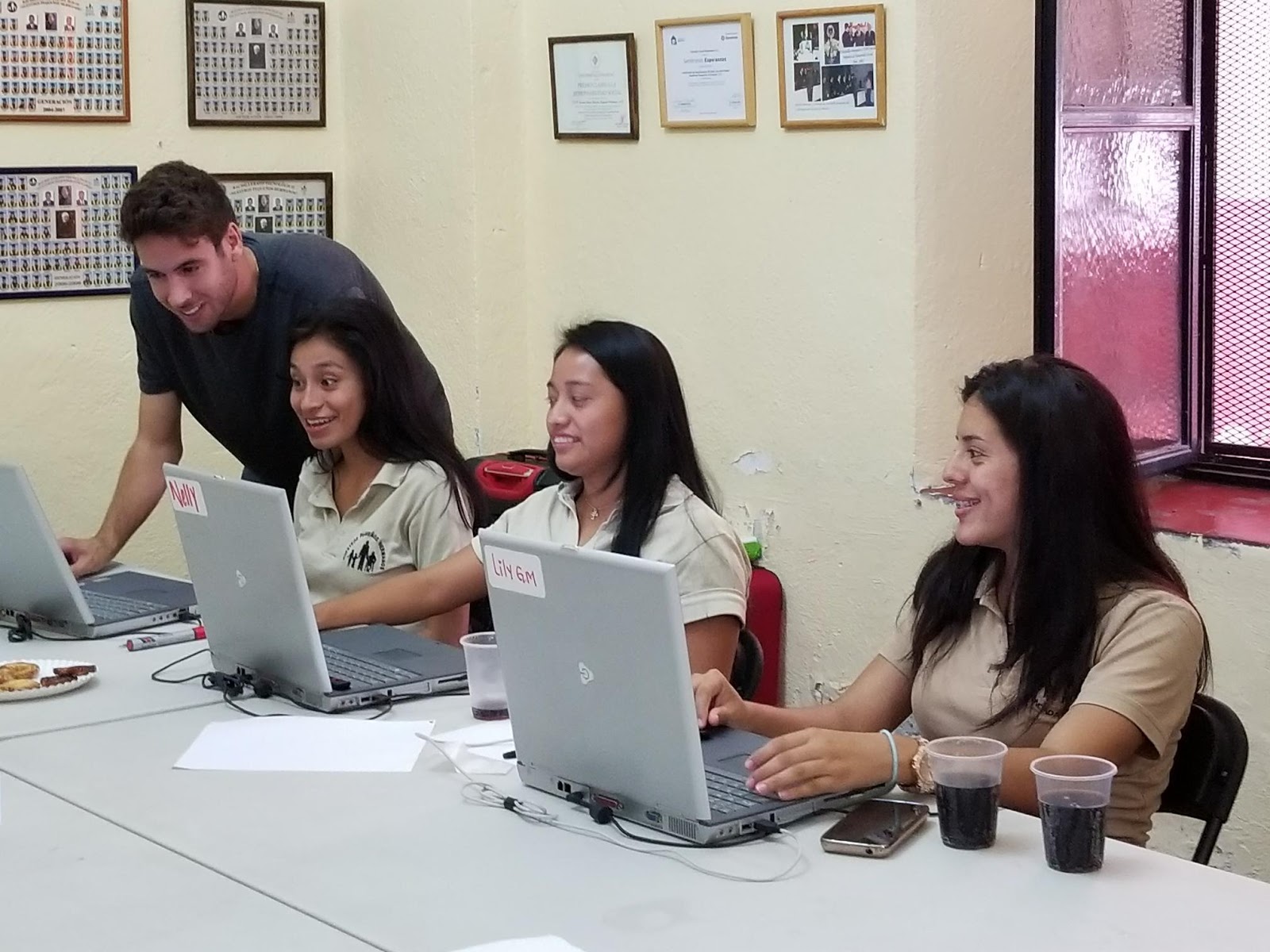
NPH USA's first pilot laptop project was the result of a collaboration between Gilbert Classical Academy (GSA) and NPH sponsors, Teresa Ventoza from the SW region and Sarah McNary from the NW region. It was coordinated with and received enthusiastic support from Belinda Roda of the SW office.

It started with Teresa’s and Sarah’s idea of providing a laptop to second year service students headed to university and blossomed through a conversation at the Southwest Region’s NPH Gala. Mr. Erik Gilman, who teaches service learning to high school students at GSA, was sitting at a table with Teresa. Erik heard about the idea and suggested that this need could be a perfect match for a class project at GSA in partnership with Arizona State University’s (ASU) STEM service learning program. Four students from the junior class of GSA, under the direction of Mr. Gillman championed the project and decided to come up with a way of obtaining computers that could be refurbished for the students in the NPH home in Mexico.

The STEM service learning is a program sponsored by ASU. To qualify for the program, students find a project that helps a non-profit organization, write a proposal to obtain funds, and, once approved, work on completing it and delivering it to the organization. The GSA students enthusiastically embraced the project and did a wonderful job of refurbishing laptops and loading them with software tailored for the university-bound recipients. It truly was a labor of joy and connection across these two student populations that enriched both groups.

Six young women benefited from this initial collaboration and were overjoyed with this tangible support for furthering their education. While this was an initial pilot project, the need exists for more laptops to support other university-bound students and this presents an opportunity for future projects. For more information, contact Belinda Roda at
broad@nphusa.org.

"It is truly a joy and a privilege to be part of the NPH family and to be able to encourage these remarkable young people to continue their education. My darling Goddaughter is one of the young women who received a computer and I know that she, as well as the other recipients, felt elated by this expression of support and confidence in them as they take this next important step in their education. Huge thanks and kudos to Erik Gillman and the students at Gilbert Classical Academy for making Teresa's and my concept a reality. It would be wonderful if we could build on this promising beginning." - Sarah McNary

"It was a privilege to be part of the link between two groups of young people who are doing what they can to make the world a better place. My hope is that this pilot computer program inspires other groups to reach out across borders to help each other." - Teresa Ventoza


Thursday, June 15, 2017

Mariela's story...

Hola everyone.

I am Mariela from NPH Mexico. Please excuse my English…those ESL classes are working slowly for me. 

I am grateful for this opportunity to be in front of you. The people who make NPH possible, without knowing us, you have decided to be part of our life. 

I would like to share a little of my story with you.

So, how did I arrive at NPH? One of the most impactful moments of my life was when my father abandoned us, and my mom died from cancer. I was 7 years old. 

My sisters (Anahi) and (Lucero) and my brother, Christian, and I were left with my Aunt Victoria, who was a single mother. She already had 2 children, one who was disabled. I cannot imagine how hard it was for her to take care of all of us. 

I remember the day when she told us about NPH—how it would be better for us there and that she would always support us. I was 8 years old, and I did not understand what was going on, but I was scared. 

When I came to NPH with my sisters and brother, it was so different. There were so many children and the house was so big! 

Time passed and things changed, and after a while, everything was great. I had many friends at school and we played every day. Sometimes, I wondered where my family was and why I was in NPH. 
 

I just wanted to have my mother and father. 

A “normal” family. 

But then I realized that all the people that were around me at NPH, were now my family. They were the people with whom I share a story, share a life, and that no matter what our past is, we are now making a new story, together. 

At NPH, I kept studying and after high school, we all give 2 years of service to say thank you to NPH before going to university. During my years of service, I took care of a group of 50 girls between 9 and 12 years old. It was really hard work – but during this time I learned that even though I was still young, if you act with love you will be an inspiration for others.

When I thought about the university, I had to decide what I wanted to do with my life. 

Where did I want to go? What did I want to do? Archaeology? History? Administration…well, in the end, I chose Dentistry. But why? This is a good story…
One day when I was 17 years old, I did something wrong—though now I can’t remember what it was. As a result, I had to help the dentist at NPH in the mornings for one year. Although I did not like helping at first, I loved helping the dentist so much, that it became my dream to be a dentist. 

I studied dentistry at the university in Monterrey in northern Mexico for 6 long years…and I graduated one year ago, right before I came to Seattle.  

It was not easy, but I did it and now I am Dr. Mariela Jaime!
 

Now I am here in Seattle for the NPH Leadership Institute. Studying, growing as a person, being responsible, and trying to learn how to be a leader in my community. It is an experience that has allowed me to grow personally and professionally, and it has given me the opportunity to share with my brothers and sisters from other countries.

I have chosen to become an inspiration for my younger brothers and sisters, following the legacy of our beloved Fr. Wasson—who founded NPH. I am only a small part of the seeds that he planted and 

I know he is proud of us all. 

When I return to my country, a new stage will begin in my life, where I am going to face the world outside NPH. It scares me, but I know have the skills, values, and family to succeed. 

I want to end by taking this opportunity to say thank you for believing in NPH, supporting me, and being part of my life. Thank you for helping to give us opportunity and education. NPH really transforms lives, and I am an example of that. 

If you have any questions, feel free to talk to me or the other leadership students here. We would love to answer any questions you have. 

Thank you!

Tuesday, November 29, 2016

Your heart will be the fuller and your life the richer for it...

Below is a testimonial by son and mother, Carson and Anna Stevens, who recently visited four NPH homes! Caron, a volunteer who has worked at NPH Honduras from 2014-2015 went with his mother back to Rancho Santa Fe (Honduras) as well as the homes in Mexico, El Salvador, and Guatemala! Read about their journey below!
 
 
My mother and I recently visited four NPH homes in North & Central America (October 11-24, 2016) as a follow-up to my volunteer year at NPH Honduras (June 2014-July 2015) and as part of our mutual dream to see any and as many of the NPH homes as possible.  On our trip we saw, in order:  NPH Mexico, Guatemala, El Salvador and Honduras.  We had earmarked two weeks to make the trip but the main pitfall was obvious as soon as we were leaving the first home (NPH Mexico): the visits were too short (2-4 days at each home)!  Nonetheless, we got a flavor of each home and felt welcomed and befriended by countless pequeños (the resident children), staff and volunteers within minutes of arriving in each location.


Casa San Salvador, NPH Mexico (in Miacatlán), the genesis of NPH and most populated home of the four, felt like a safe, secure and peaceful fortress or campus despite its original use as a sugar plantation (which, we were told, extends all the way back to descendants of the Conquistador Cortez).  We met lovely toddlers, kids, youth and staff and learned a lot about the home´s past, its present projects and the future direction of the home.  Many people made the trip amazing, but particularly the kind and gracious Volunteer/Visitor Coordinator, Daniel, and Farm Director, Doctor Julio.  Dr. Julio explained to us how he manages the crops being grown, the philosophy behind it, and how the children are a huge part of the harvest, not merely because of the labor they provide (after school hours), but because of the education they receive in learning responsibility and how to respectfully live and grow alongside nature.  We were able to spend time with Marion, the pioneer and face of the Taller de Arte art therapy program, and her students as they carefully prepared papier-maché skeletons and skulls for El Día de Los Muertos (the November 1 Day of the Dead holiday).  We also sampled the wares of the Taller de Arte giftshop, where students donate mosaic creations (e.g. picture frames, vases and crosses) to support the art program, in keeping with the founder of NPH, Padre(Father) Guillermo (William) Wasson's principle of giving pequeños a sense of responsibility and contribution to their NPH family, or community.  Additional highlights of the trip included visiting a third grade class during a health lesson, dining and conversing with the pre-Kinder group, and attending the despedida (goodbye party) in honor of Maestra (Teacher) Eva, a teacher who taught at the home for 40 years AFTER having grown up in it.


Casa San Andrés, NPH Guatemala (in Parramos), immediately had a different feel because the home is located high in a cool mountain region.  Apart from some midday heat, it was much cooler in the morning, afternoon, and evenings than at the other homes.  The setting was stunning- on a high hill encircled by close mountains all around with a volcano (Volcán de Acatenango) nearby.  When we arrived, the school year had just ended and vacation had just started.  Things were quiet and calm, with a relaxed schedule of chores in the morning then recreational activities and free time in the afternoon.  So many people in NPH Guatemala were friendly, welcoming and eager to get acquainted with us.  Casa San Andrés had a higher ratio of volunteers (19 volunteers: 300 children) than Mexico (8:500), Honduras (19:450) or El Salvador (0:300; currently no volunteers).  We received incredible help and orientation from the Visitor Coordinator, Michael.  Among the many inspiring people we encountered at Casa San Andrés were Ismar Velásquez, hermano mayor (former pequeño) from NPH Honduras, as well as an old friend "on loan" from NPH Honduras:  Juan Bautista, a University student whose drive and focus allowed him to pursue his studies in Guatemala, with NPH Guatemala's support.  Highlights of the visit included sampling the snacks at the “Tienda Sonrisa” (The Smile Store) run by Special Needs pequeños and supervised by a youth in her año de servicio (pre-university service year pequeña, also referred to as año familiar), admiring and purchasing a few items from the Taller Recreativo (recreational workshop), a special needs recreational therapy workshop that makes artwork and jewelry for sale, with the proceeds going to the project and NPH Guatemala.  Like the Taller de Arte giftshop in NPH Mexico, both projects are great examples of Padre Wasson´s principle of giving pequeños a sense of responsibility and contribution to the home.  One final unique experience for us was seeing the pequeños divide into teams for the Guatemalan home's upcoming 20th anniversary, an experience in NPH Honduras known as “Las Olimpiadas.”


Casa Sagrada Familia, NPH El Salvador (in Santa Ana), was unique because it was the youngest, smallest and least populated of the four homes we visited.  If anything, the smaller space and lower population of the home allowed us to get acquainted more quickly with the home and its pequeños and staff.  We were also struck by the warmth and graciousness of the Casa Sagrada community of pequeños.  Everyone we passed- from the youngest preschoolers through the oldest año servicios- stopped, looked us in the eye, shook our hand and greeted us warmly.  Our visit was facilitated by the friendly employee, Carmina, who gave us a very enjoyable and helpful tour.  An additional highlight included meeting Brenda, one of the home´s administrators, who has worked there since the home opened in 1999.  We were able to visit two days of classes and spend our time in the most structured manner of the four home visits because of the timing (NPH El Salvador was getting ready for exams and was therefore in more of a regular routine; Mexico had been busy with a special event- the celebration for the retiring teacher- Guatemala had just ended their school year, and the Honduras visit was during the weekend).  We had breakfast and lunch with the school-aged groups and dinner with the casa de bebes ("baby house"), where the youngest pequeños (ages 3-8) live.  The little kids treated us to an unforgettable dance session, which included punta (traditional dance popular in Honduras, a homage to my Honduran “roots!”) as well as choreographed routines to pop music and several renditions of their NPH anthem.  We were impressed by how well the children of different ages got along with and looked out for each other and how close and friendly staff members and children were to each other.  We attended a beautiful, uplifting mass on Saturday morning before departing.  The two most noticeable differences between mass in El Salvador and Honduras were that NPH El Salvador has a more traditional, large church for their masses with amplified live music, while NPH Honduras uses an amphitheater and acoustic music.


Our visit to El Rancho Santa Fe, NPH Honduras (nearest to La Venta), was at least the fourth visit for each of us.  We spent several hours with the residents of Casa Emanuel, the hogar (dorm) I worked with as a volunteer.  Casa Emanuel is the hogar for the older group of Special Needs boys and men at El Rancho.  Mom met some of the surgical brigade staff and briefly helped them get some last-minute lunch food ready while I watched futból (soccer) with Casa Emmanuel, the Visitor Coordinator, Steve, and the año familiar currently working with Casa Emmanuel.  We also met some Honduran brigade-translators in the dorm section of the Volunteer House where we all were lodged; all four were talented, eager and interesting people.  We greatly enjoyed seeing the babies, kids, youth and staff but it was a somber moment to visit because dear Abuela Engracia from Casa Eva, (“Casa de Los Abuelos,” or the home for elderly people at El Rancho) had just passed away.


Each home visit was unique and tremendously moving.  While we would recommend visiting each home, the smaller physical size and populations of the Guatemalan and El Salvador homes seemed better suited for a short trip.  A few miscellaneous tidbits we learned along the way:  The more Spanish you (or someone in your group) know(s), the better your trip will be (this includes the trip to and from the home, especially if something unexpected happens and you have to spend a night, or- like us- TWO nights in a capital city); have backup plans for all transport and lodging-related details; and, finally, you´ll spend less money if you have secured some local currency ahead of time (it can be ordered ahead of time at local US banks and AAA travel club offices).  Because of the distance from the capital city to the home, NPH Mexico was unable to provide transport to and from the airport (the other three homes did).  However, it was easy enough to do that bit on our own, and the bus line the home recommended (“Pulman de Morelos”) stops literally right in front of Casa San Salvador.
 
 
All four homes are filled with wonderful people whom we feel blessed and grateful to have met and hope to see again soon (which we´re sure would be the same case at all NPH homes and communities).  Perhaps as a metaphor for Central America, the homes do an amazing job of providing visitors with breathtaking contrasts that sometimes change instantaneously: from beautiful, calm, quiet views of mountains, fields, farms and pastures to a cacophony of voices, laughter and el latido (the beat) of hundreds of kids living Padre Wasson´s dream.
 
 
While it would be easy for us to plug Mexico as the most populated, beautiful and original home that it is, Guatemala for its pleasant climate, strategic layout and most visitor-ready feel, or Honduras as our deepest emotional connection, we´d like to point out that El Salvador REALLY deserves visits!  Whether it´s due to being the youngest of the 4 homes, having a less-established volunteer program, or other factors, a visit there definitely seems the most unique and special for the home and they REALLY- all ages and roles- show their appreciation!  We encourage those who have never visited NPH to do so because it is a life changing experience, and for those who have been to one home and (understandably!) continue to go back there whenever possible, consider visiting another home as well.  Your heart will be the fuller and your life the richer for it.


Thursday, September 22, 2016

We left with our hearts full of love for the NPH children….

Below is a reflection written by sponsor Victoria Lloyd after her she, her husband, and their three young children visited NPH Mexico this summer.

In July my husband, my three young children and I spent a week at NPH Mexico. After meeting the Pequenos last fall during their tour in the Boston area, we were eager to see the children again and become more involved in NPH. Having never done anything like this, we went not knowing what to expect, or how our own children, ages 9, 10 and 12, would react to such a different environment. Would they be able to relate to these children whose lives are so different from their own, who don’t speak the same language, and who have experienced such great difficulties and in some cases, tragedy, in their young lives?

After a few hours in the home, we realized we had nothing to worry about. Seeing our own children and the children of NPH play together, without sharing a language, made us realize why we became involved in NPH in the first place. These are kids, just like ours, who want to play, laugh, connect with people who care about them, and just be kids. And that is exactly what NPH does for them. During our week, we saw how hard the caregivers and all of the employees work to provide a safe and loving childhood for these kids. Our job, we quickly realized, was to just reinforce that love and let the children know how blessed we felt to be even a small part of their lives. 

During the week we had the opportunity to play with the kids, do arts and crafts with them, and help out in repainting their basketball and volleyball courts. Through all of this I was amazed at how my own children and the Pequenos were able to connect and enjoy each other. It didn’t matter that we don’t speak Spanish, we created bonds with the kids that transcend language. Seeing my own kids and the Pequenos laughing over inside jokes they somehow created together, making up dances together, braiding each other’s hair, playing a spontaneous game of tag, or frisbee, or any other activity that kids do during their summer vacation, made us realize we had done the right thing in going on this trip. Our kids have been asking since our return, “Can we go back there at Christmas instead of doing Christmas?” 

We went to the home bearing suitcases full of supplies that our parish donated to the home, and we left with our hearts full of love for the children of NPH. Though it may not be for this Christmas, we know we will definitely be back!