Showing posts with label honduras. Show all posts

Tuesday, August 31, 2021

"I have never felt more welcomed into someone’s home in my life..."

Below is a blog post written by India Zietsman Donor Relations Manager in the Midwest Region - enjoy!

I started working as the Donor Relations Manager of our NPH USA Minneapolis office on March 9th, 2020. Even before that first day at the office, I dreamt about my first trip to one of our NPH homes. I knew that traveling was part of the job when I applied and it was a highlight of the job description for me. I value that NPH USA sends their fundraising employees to visit the homes so that we have a deep understanding of our work.  

During my onboarding, I spoke with numerous co-workers to learn all about my day-to-day work as well as the general mission of NPH. When coworkers spoke about our programs and kids, they lit up. They explained that there’s something intangible and indescribable that makes NPH truly special. Every co-worker would say, “When you visit a NPH home, you’ll understand.” 

My third day in the office, my boss Stephanie and I decided I would plan to visit NPH Guatemala and NPH Nicaragua during the summer of 2020. However, as we all watched the world shut down with the arrival of the pandemic, I knew my chances to visit a NPH home in 2020 were extremely low. 

Fast forward a year and a half. The United States is slowly opening up with the arrival of the vaccine. My co-workers are buzzing because finally, we are planning our first trip to a NPH home since the pandemic hit. And guess who’s on the list of attendees? ME! I truly screamed with joy when I found out that I’d be traveling to NPH Honduras in August 2021. I had watched all of the videos on NPH USA and NPH International’s YouTube accounts. I had read almost every article, webpage and brochure about our programs and our kids. I had learned as much as I possibly could from afar. After a year and a half, I’d be able to experience it all in-person. 

I have never been more overwhelmed with both joy and nerves at the same time in my life. A million questions came up: What did I need to do to prepare for this trip? Would the kids like me? Would the kids be excited to meet us? Would my Spanish (which I hadn’t used in 5 years) come back? And many more that I’m too embarrassed to admit in a blog post.  

We landed in Honduras at 3pm on a Tuesday and began driving to NPH Honduras, also known as the Ranch. Everyone who’s been to Honduras knows that driving there is slightly terrifying. Cars don’t just drive with a purpose there… they drive aggressively; constantly trying to overtake slower cars ahead of them on one-way roads. When we arrived at the Ranch, I think we were all grateful to be off the highway and inside the gates of the safe, gorgeous, calming property. We were also in awe of the enormous size of the Ranch. I got lost almost every time I walked around up until the last day of our trip. 

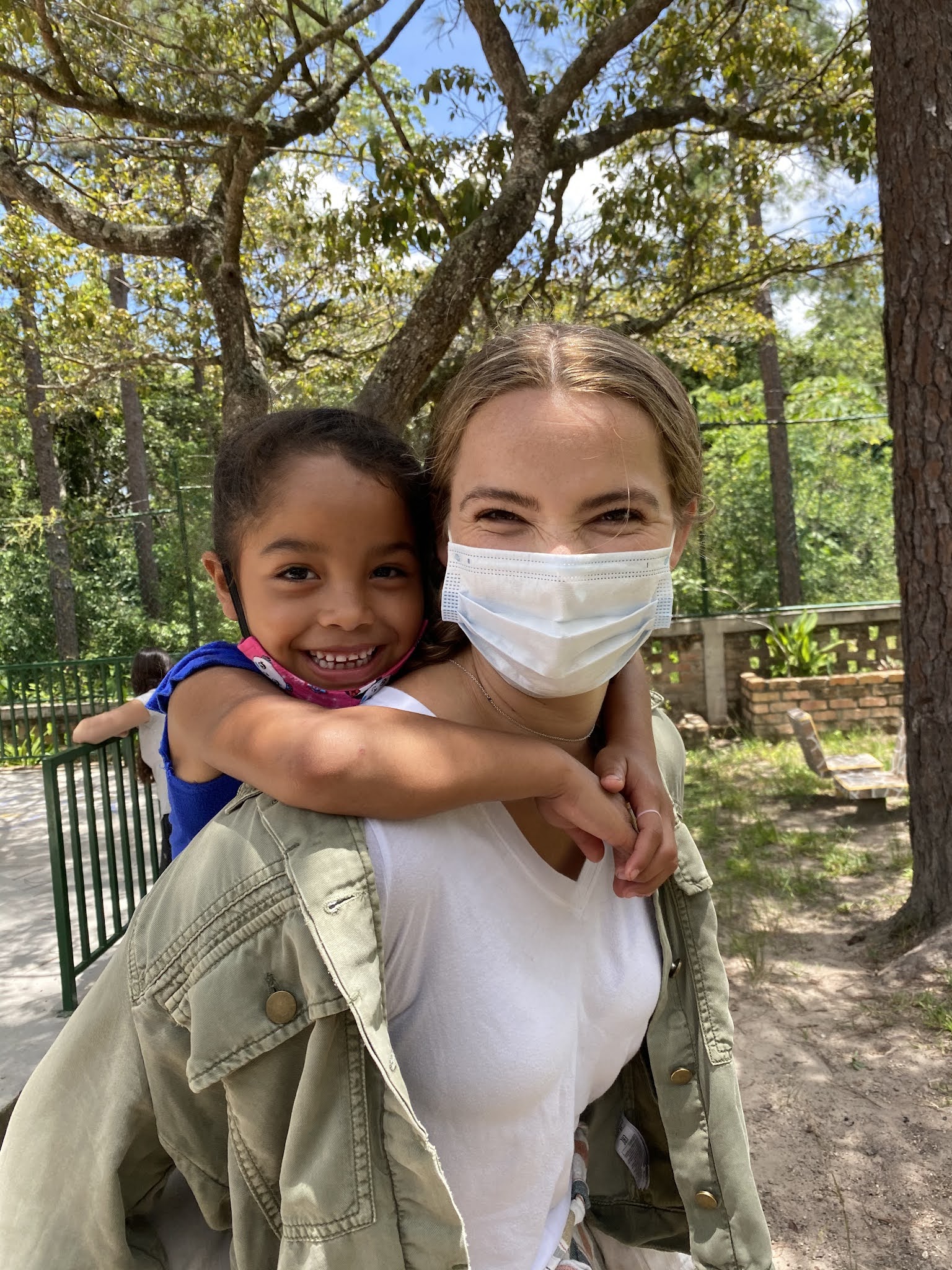
After three days of quarantine and a negative rapid COVID test, we could finally meet and spend time with the pequeños. Once again, my nerves and joy took over. I could feel myself shaking with anticipation. My first night with the kids, I had dinner with some of the older girls in their hogar, which is Spanish for “home”. When I stepped through the door, all of the girls ran up to me. They immediately gave me hugs, said “hello” or “hola” and asked me to come sit and eat with them. They were so excited to have me there and talk with me in my rusty Spanish. I have never felt more welcomed into someone’s home in my life. After dinner, they convinced me to dance and sing with them to American songs. I typically refuse to sing in-front of ANYONE. But looking into their eyes and hearing their pleas, I couldn’t say no. 

I walked back to the visitor’s center that night with the biggest smile on my face. My heart was overflowing with love for the girls I had met. They were all incredible. They immediately opened up to me – telling me about themselves, sharing laughs, and asking me all about myself. Now that I have had time to reflect, I recognize that I’ve never experienced anything like it in the United States. I was a stranger to these girls when I first arrived but left their home as a friend, as a member of their family. 

Hogar after hogar that I visited each day after that first dinner with the girls, I had the same experience. Kids running up to me just to offer a hug and say hello while I walked past the playground. Kids yelling my name as they watched me walk by their home. Kids sharing their passions and interests with me either through words or actions. I fell in love with all of them. I finally understood what my co-workers meant when they said, “When you visit a NPH home, you’ll understand.” 

I now have seen with my own eyes that NPH is truly unlike any other organization. NPH understands that every one of our kids is special and unique. While in Honduras, we were asked to describe NPH in two words. My words were holistic and human. I knew about our holistic programs before traveling to Honduras. I had read that they encourage our kids to be fully themselves, and that they have the power to empower. However, I only connected to the deep humanity of our work when I met our kids. Meeting them has given me a face to think about when I talk about our work. Today, I sit in my office and smile knowing that the work I’m doing is supporting them: those kids with beautiful dreams, incredible talents and huge hearts. 


Wednesday, October 28, 2020

The love that exists on the ranch is palpable, and I was lucky to have been there to experience it in person...

Below is a reflection written by Alec Helmke who volunteered at NPH Honduras earlier this year. Let's see what he has to say!

It’s been months since my unexpected departure from Honduras, which is truly hard to believe. Shortly after I returned, the idea of being “stuck” caught my attention. As I tried to stay up to date on news in Honduras, the same headlines seemed to pop up: “Massachusetts woman finally home after getting stuck in Honduras,” “Allen, Texas resident stuck in Honduras desperate to get out,” “Medical professionals back in U.S. after being stuck in Honduras.” As someone who faced an oncoming pandemic in Honduras and was aware of the under-resourced healthcare system in the country, I was certainly anxious to find a way back to the States. But was I “stuck?” And is this the type of language I want to use to describe my experience? Now, these may seem like unnecessary questions in a time where more pressing concerns abound, but the connotations of “stuck” are almost unquestionably negative: “My truck got stuck in the mud,” “She got stuck at a job she didn’t enjoy,” “He was stuck for hours in traffic.” Simply, people get stuck in bad places, and I want to change the narrative. Absolutely, I needed to leave Honduras—for the safety of the kids, my friends, and my loved ones back home. But I was never “stuck.” And now—in a time dominated by uncertainty and negativity—I want to focus on exactly the opposite. That is, rather than writing about the challenges, both physical and emotional, that I faced leaving early, I want to speak to the blessing it was to spend nine months in Honduras.

In hogar is where my NPH story must start. Spanish for “home,” hogares are groups of children who live together under one roof on the larger NPH ranch in Honduras. The hogar to which I was assigned, a group of boys between the ages of eight and fifteen, was named San Francisco. I may be biased, but I lived side-by-side with the best group of kids on the ranch and I cherish the connection I formed with each boy. My hogar became, fittingly, a new home for me—a place where I was able to center my experience at NPH. While the surgery center where I worked was a rapidly-changing environment, with new medical brigades arriving every week, San Francisco stayed the same: a place where I could go every night to spend time with the boys I cared about—playing games, joking, listening to music, working on homework, and so much more. The special moments we shared together have left an indelible mark on my heart. I’ll mention a couple that stand out to me. The pijamadas, or sleepovers, were always a great (although not exactly restful) time to share with the boys. The tios, or caretakers, would cook a special dinner, I would bring popcorn, and then we’d all spend the night on mattresses spread over the floor, watching movies until we fell asleep. It usually followed the same pattern too. First, within fifteen minutes, Teodor, the littlest boy in my hogar, would fall asleep. Then, the other younger boys. Then me. The older boys would wake up the next morning bragging about how late they stayed up, always making sure to mention the one or two movies they watched after I had fallen asleep. 

The work was hard, but, for some reason, I always enjoyed doing chores on Saturday mornings. Usually, we would spend a few hours using machetes to cut the grass around the ranch, and, let me tell you, learning to wield a machete is not easy! For the first few months, I would stand in awe as the boys, even the youngest ones, would whack at the grass for a couple hours, cutting huge swaths into the overgrown lawn. Meanwhile, I’d have to take a break after 30 minutes as blisters began to swell on my hand, barely having cut through a few feet. But, I always loved the chance to be with all the boys outside working together towards one goal. It was certainly a big change from what I was used to as a child, where Saturday mornings were reserved for cartoons and a nice, big breakfast! 

Memories abound. From trips to swim in the pond, to pizza nights, to simply the meals we shared—the time I spent with the boys in San Francisco will always stay with me. Nor will I be able to forget how I felt in the smaller moments: as the little boys sat nestled against my chest while watching a movie, as the older boys laughed with me during our conversations around the kitchen table, and as I walked home from San Francisco in the cool night air—absolutely drained of all energy, but filled with a sense of love and appreciation as I relived the joy I had shared with my little brothers that night. They say you can’t choose your family, and—although it may seem as though I chose to be a part of San Francisco by signing up to volunteer at NPH—that’s not the case. God put me in my hogar, and the boys welcomed me to be a part of their family, leaving me with a sense of gratitude I’ll never be able to fully express.

Honduras is an overwhelmingly beautiful country—from the pristine white-sand beaches and turquoise waters of Roatan, to the thick, verdant jungles surrounding Lago de Yojoa, to the roaring, orange-tinged waterfalls near Valle de los Angeles, to the simple, yet awe-inspiring vista from the peaks just above the ranch—but I digress… The most beautiful part of Honduras, and of the ranch itself, was the people I encountered. Of course, the boys in San Francisco are the cutest ones on the ranch, but there are a bunch of other great kids too!

I always had a lot of fun during activities, which brought together pequeños from different hogares so they could spend time with one another as brothers and sisters. There were movie nights, where I could usually expect one or two younger kids to use me as a pillow as they crowded around the projector screen in the brisk night air. There were dances, where—if I wasn’t showing off my killer moves—I was dancing with some of the pequeños or playing tag with the younger kids who didn’t want to dance. There were plenty of soccer games too, and—from my very first game on the ranch, where a girl kicked me square in the face with a soccer ball, to my last game, where the boys seemed to score on me effortlessly—I never seemed to get the hang of the game. Celebrating holidays together was a special treat, and I remember New Year’s Eve especially well. During the day, I made a new friend: a little seven-year-old girl, who—no matter how fast we had to run nor how long we spent searching for clues—held my hand for the entirety of the ranch-wide scavenger hunt. Later that night, as I sat near a crackling bonfire, I was surrounded by a group of some of the youngest boys on the ranch, and we laughed together right up until the fireworks were launched at midnight. Between the embers of the fire, the fireworks, and the smiles on the boys’ faces, I really can’t say which shone the brightest. 

And there were little joys of living with the kids on the ranch too. I always loved weekly mass with the pequeños, even though it might not have been the most solemn religious experience. In no other church have I felt the same spirit as I did sitting on the concrete pews among hundreds of kids. Sharing the sign of peace was an especially beautiful moment for me, as the hugs and smiles always filled me with a sense of happiness and belonging. The songs we shared were beautiful too. They weren’t always in tune, but they were always filled with a sense of joyful energy that was unique to the ranch. This same energy was infused in almost every conversation I had with pequeños, as the kids breathlessly shared their excitement about an upcoming activity, asked me about their friends and siblings on other sides of the home, or joked with me about daily life on the ranch. This spirit of excitement extended to even the youngest of the pequeños. As I walked home with another volunteer from a long day at work one afternoon, I recall passing by the chiquitos: the toddlers who lived on the ranch. When we turned the corner and came into view, a happy noise shot up among the little ones. And, before I knew it, one of the chiquitos was waddling towards us, his little belly bouncing as he awkwardly tried to navigate the bumpy path between us. He reached up, his arms extended towards me, and I wrapped him in a great big hug. As I joked about taking him with me back to the volunteer house, hoisted him over my shoulder, and took a few steps in that direction, I could hear his little laugh wash away all the challenges of my busy workday. 

The love that exists on the ranch is palpable, and I was lucky to have been there to experience it in person. The laughter, the smiles, the hugs, the hundreds of personal connections I’ve made with these kids—all of it has left a mark on my soul. So, what more can I say? I could continue reliving countless memories and describing more of the incredible people I had the privilege to meet in Honduras, but I think it’s time to get to the point of this story, that is, to say thank you. And since words will never do the sense of gratitude I feel justice, I’ll keep it simple. Thank you to every boy in my hogar for filling my time in Honduras with joy and for blessing me with a new family. Thank you to the children of NPH for welcoming me and for offering me memories that I will cherish for a lifetime. Thank you, Honduras, for letting me witness the beauty of your landscape and your people, and for letting a chele feel like a catracho for just a little while. And thank you God, for nine months that challenged me, shaped me, enlightened me, and filled me with an irreplaceable and unforgettable sense of joy. 

I was never “stuck” in Honduras, not even at the end. Every moment I spent in the country was a blessing, even the difficult ones. And the deep connections I have formed at NPH mean that the space Honduras fills in my heart certainly doesn’t match the space the country fills on a map. No, I was never stuck in Honduras, but Honduras will stick with me forever.


Thursday, April 23, 2020

Introducing the NPH Open Home Series!


The “NPH Open Home Series” is inspired by the open house theme; a popular event in the United States that is a friendly, casual time when people are invited to come into your home. Home evokes the image of Family - a core NPH principle. For those of you that know us well, you're well-aware that NPH is a giant, international family. So, while the theme open house may be U.S. centric, the idea of opening one’s home to friends and family is global.

This live video series is an invitation for supporters, old and new, to come into the NPH world in more ways than one. Viewers will hear from personnel inside the NPH homes. Due to the COVID-19 pandemic, we’ve had to cancel numerous trips and events. Still, amidst the global health crisis, families have found strength inside their homes. The NPH family is no different. We invite you to step inside our homes as well as our philosophy and values.

Take yourself virtually to Honduras on April 30th and join us for the launch of the Open Home Series! Episode 1 will feature NPH Honduras National Director, Stephen O’Mahony where he will address the challenges of the global health crisis and update you on the children and programs of NPH Honduras.


Sunday, April 19, 2020

I wanted something to last longer than my time here at NPH...

Sophie Herman has provided much help and support to our home in Honduras during her time volunteering there and she is a grateful recipient of our Hightower Kloos Legacy Fund for international volunteers. Below is a lovely reflection from Sophie that speaks to the true spirit of NPH - care and giving back. Thank you to Sophie and ALL our amazing international volunteers for being a part of the NPH family and for donating their time and energy to have such an incredible and positive impact on the lives of our children.

With the  Hightower Kloos Legacy Endowment I received, I have been able to greatly impact my hogar at the NPH home here in Honduras. With the money, I had many options and ideas of what I could do. I wanted something to benefit the children with disabilities and I wanted something to last longer than my time here at NPH. With many meetings with coordinators and fellow employees on the Ranch, I decided to start a caseta, or a little store, to help raise money for the special needs hogares, or homes. This way there is always a source of income for the hogares/homes which need money or donations, and it is something that could be continued on even after my year of service. Not only does the caseta provide funds for the hogares, but also it provides a work opportunity for the kids with disabilities who are able to participate and work. 
 
I was given an old, abandoned caseta-type building from the hogar coordinator and I got right to work to fill it with needed supplies and equipment. The biggest expense and where most of the money from the scholarship went was to buy a freezer. With the freezer, I am able to help the kids with special needs to make paletas, or popsicles, and charamuscas, which are little bags filled with juice that you freeze. I also bought kitchen supplies such as a blender, electric water heater, measuring cups, utensils and more little things that were needed to make all the treats that the caseta would sell. The last thing I bought with the scholarship money was products to fill the caseta, such as Pepsi products, popcorn, hot chocolate, coffee, chips, cookies, juice, lollipops, and other treats that the kids on the Ranch request. 
 
Just 4 months into the project, I was able to raise 7,000 Lempiras, which equals about $280 US. While this may not sound like a lot to make in 4 months, money here in Honduras is stretched a lot further and I have been able to buy many important and fun things for my hogar. With this money, I have been able to provide much needed shoes and shirts for the boys in my hogar, a water dispenser, a blender, and a hammock. As we continue to make more money and as my hogar´s needs are fulfilled, I will go to the other special needs hogars to ask them what kind of donations they are looking for and what will help the kids as well as the tios and tias. I am excited and super happy to be able to provide funds and donations to the kids on the Ranch who do not usually receive this kind of help, and I could not have done it without the money from the  Hightower Kloos Legacy Endowment. This money is really making a difference in the lives of the children with special needs and I am happy with the current success and the future progress of the caseta.


Friday, April 10, 2020

We wish for good health and safety for all during this trying time...

On behalf of everyone at NPH USA, we wish for good health and safety for you and your family during this trying time. You are an important part of our global NPH family, and are in our daily thoughts. And, you are in the thoughts of our NPH children, with many of them asking how their godparents are doing.

Below are brief updates from each of the NPH homes:

Bolivia

On March 22, the Bolivian government imposed a country-wide 14-day quarantine prohibiting people from leaving their homes except to buy groceries or receive medical care. The government hopes to slow the spread of COVID-19, which has reached a total of 40 confirmed cases as of 26 March. With no classes scheduled, our children have new-found free time and it is up to the remaining caregivers and volunteers to devise fun ways to keep them busy and constructively entertained. With a mixture of work, games, and homework, we fill the children’s schedule with a variety of fun and safe things to do. In the morning the children’s schedule can include chores and academic studies, which include cleaning their casita, working with our agronomist Hugo, helping in the clinic, working in the casita of our youngest children, and helping in the library.

Last weekend the older boys and girls worked with Hugo to harvest fish from the fish ponds for the home to eat. The boys used a large net and dredged the pond from one side to the other to catch the fish in their nets. Once collected the older girls helped clean and prep the fish for cooking. On Sunday, we cooked a large lunch for the entire home; each person got half a fish with rice, yucca, salad, and lemonade. “It was a lot of fun being able to go into the pond and fish for our lunch with the older kids,” Renzo explained. “Tío Hugo knows a lot and was teaching us how to clean and prep the fish for grilling.” After lunch the children chose their own activities. They can participate in planned activities or rest and relax. Choices range from table games, drawing, jigsaw puzzles, and writing cards to their godparents to sports like soccer, volleyball, and ping pong, and watching movies together at night.

Dominican Republic

Since the first case of COVID-19 in the Dominican Republic was detected on March 1, NPH Dominican Republic has been quick to implement precautionary measures and prepare the children to help prevent an outbreak inside the home. These measures included tutorials from NPH doctors ranging from raising awareness to handwashing, as well as talks about the impact of the pandemic. Caregivers constantly remind children to wash their hands and the children find different ways to greet one another without shaking or touching hands.

The children at NPH Dominican Republic have been doing their best to remain proactive and healthy. During this period, they do homework and reading assignments and do fun activities. The home has a psychologist who has stayed with us to collaborate and support the staff and children during these difficult times. NPH Dominican Republic also counts on hermanos mayores (older brothers and sisters) to assist caregivers with the care of the children and work in the kitchen. Since most of the staff has been sent home, the support of hermanos mayores helps to reduce the number of people entering and leaving the home, thus reducing risk of exposure for children and staff.

El Salvador

Dr. Monterrosa, the general practitioner at NPH El Salvador, who along with two nurses has moved into Casa Sagrada Familia for the duration of the pandemic, shares that as of March 31, there were 32 confirmed cases in El Salvador, a relatively low number compared to other countries in the region. The most important thing is to preserve the health of all children and prevent this virus from affecting the NPH family, and our home in El Salvador has taken a number of preventive measures, for example: suspending family visits (in concert with local judges, as needed); proactive outreach to medical specialists who provide treatment for existing complex medical cases in the home; close monitoring of children is in place and all specialists are on alert and accessible; strict policy of referring only emergency cases to the local hospital, which we have not needed to do so far; teaching children to wash their hands properly and give them constant encouragement to use the proper technique; implementing modified social distancing within NPH El Salvador, and providing instruction to staff about COVID-19 and proactively responding to staff questions and requests for additional support.


Guatemala

Spencer Cappelli, former Communications Officer at NPH Guatemala, recounts his experiences returning from the Central American country during lockdown due to COVID-19.


Meanwhile, NPH Guatemala has been taking care and busy working with local communities, One Family and Hermanos Mayores, around Itzapa, Guatemala, ensuring the most vulnerable members of society receive support in the face of COVID-19.

Haiti

Nos Petits Frères et Soeurs, (or NPFS, the French name for NPH Haiti) which has served vulnerable communities in Haiti since 1987, is working to ensure that our kids remain safe, whether they live in the flagship home St. Helene in Kenscoff, 25 miles outside Port-au-Prince, or in our special needs rehabilitation centers Kay St. Germaine, Kay Gabriel, and Kay Elaine supporting some of the most vulnerable people in the country—the very same population that is most vulnerable to COVID-19.

The homes have prepared ahead of time by taking decisive measures and implementing preventive protocols establish by NPHI Medical Services for all of NPH. Instructional posters have been hung around the schools and homes to remind everyone what to do and what not to do. Masks, gloves, and hand sanitizer have been stationed around the homes for easy access by staff and children.

Sanitation stations consisting of buckets with soap and diluted bleach solution have been placed around the homes; staff and children are encouraged to use them to clean their hands when access to a standard washroom is not available. Children have been taught to avoid close contact with other children. For St. Damien Pediatric Hospital, three sanitation stations have been set up at the entrance to the hospital for patients and visitors to wash their hands before entering.

Meanwhile in the current state of national lockdown, our caregivers organize activities to keep our children entertained and take their minds off the crisis. 

Honduras

Three weeks ago at Rancho Santo Fe, we already initiated phase two of our coronavirus preparedness plan where we invited all staff who is willing to stay at the Ranch until this is over to do so. Overall, we estimate a core team of 50 individuals who have agreed to stay, and we are hopeful that with locking down the Ranch to the point that very few come and go (some drivers, the security team), we have done all we can to prevent the virus from entering. Our high school and university students can also help out with the work, which is a huge relief. OWS has authorized us to use the Moscati Center as the isolation center in case we have suspected or positive cases and the surgery center overnight unit for more severe cases as it has oxygen connections next to the beds. Dr. Merlin has also offered to join us if it becomes necessary.

The demand of our work still only increases. We were able to bring most Pequeños (high school and university students) home but still need to care for many Hermanos Mayores. Simply getting food or medicines to them is already a challenge. Plus, more and more people living in poverty from our neighboring communities turn to us for food. Last week, we packed another 75 baskets with basic food staples. We will continue to do our best to help those around us, even if it is just a drop in the ocean of hunger. 


Mexico

The NPH Mexico family has been working closely with our medical staff to implement cleanliness and hygiene protocols and social distancing guidelines in each of the homes to ensure our children and employees safety.

First and foremost, the NPH Mexico medical team began by teaching everyone the correct way to wash their hands. Doctors have also given talks about how the virus spreads and the importance of remaining calm and not letting our guard down. Everyone is constantly cleaning the house, rooms, and offices. Anti-bacterial hand gel has become our closest friend, especially when we do not have immediate direct access to a bathroom to wash our hands.

Although traditional classes are suspended, children are not losing out on their education. Teachers have been working hard to prepare learning material for students to use to continue their studies in their homes. Children also have a daily routine that involves cleaning the house and doing their homework and some recreational activities, which the children enjoy the most, to keep hearts and minds fresh. Staff now eat lunch in a separate place from the children, an effort to reduce the risk of contagion.

In short, everyone in NPH Mexico is taking the prescribed preventive measures seriously. The NPH Mexico family understands everyday life cannot stop in the face of a pandemic. We must continue doing what we do best: creating a loving home and providing top quality care to vulnerable children, adolescents, and young adults. 

Nicaragua

The children at NPH Nicaragua send love to their Godparents and donors around the world. While in lock-down, children are ensuring they are doing their school homework, ensuring they wash their hands and their home is clean.

The medical teams and staff in our homes have implemented preventive measures so that our children and vulnerable communities do not contract or spread COVID-19.

Peru

NPH Peru has held talks with staff and children about the severity of the virus, and nurses have given talks on how to wash hands and take additional precautions regarding hygiene. The children are currently on summer break. The start of school has been postponed for two weeks and is likely to be delayed another 15 days, at the very least. Since March 22, outsiders no longer enter the home, and two university students have returned to help cook meals as a temporary measure. Our purchasing coordinator comes into the home only when absolutely necessary.

Caregivers who normally work five-day shifts agreed to remain for the 15-day government-imposed quarantine, with the likely possibility of a 15- to 20-day extension of the quarantine by officials. Currently, children and caregivers are under full quarantine and cannot leave their casitas. All the games, books, and coloring sheets we could find around the home were collected and divided among the casitas so all the kids would have materials to play with to help fight tedium in the coming days and weeks.  

Monday, September 30, 2019

"Lessons Learned During My Visit to NPH Honduras"

Below is a blog post written by Gail Taylor, NPH USA's Northwest Regional Board Chair!

I was fortunate to visit the NPH Honduras ranch for the first time with 22 children and adults from the Northwest this past July. Before the trip, I’d heard dozens of first-hand accounts that NPH changed their lives. I had high expectations.

My favorite morning was spent with first graders in Montessori class. We attended open air PE class, where they laughed at my limbo efforts. We snacked on oranges, then went inside. The pequeños kept quiet and knew what to expect. At tables, the assistant teacher handpicked flash card sets, tailoring the exercise to fit each student’s reading level. They wanted me to watch them read their flash cards. One boy began writing in his writing book. I sat with this precious boy as he wrote. Next, the teacher gathered the pequeños by the bulletin board where she taught Spanish.

The first moment I decided NPH Honduras is better than advertised was when I was looking around the perimeter of the classroom and I saw a red concrete-like floor, faint green walls and high ceilings. I focused on the Montessori style stations, equipped with wooden shelves of library books, blocks, abacuses, flags, flashcards, writing books. Maps, posters and children’s art hung on the walls. The variety of materials appealed to sensory, visual and auditory learning styles. The stations incorporated math, Spanish, English, reading, writing, religion, geography, history and biology. This classroom wasn’t as pretty or new as the Bellevue classrooms I’ve seen. But it functioned effectively. This classroom was equipped to help these pequeños develop order, concentration, coordination and independence. Both teachers had a tighter grip on the pequeños’ attention than I saw in classrooms at home. That was the moment I realized my high expectations of NPH were exceeded. These pequeños are getting a good education that will serve them years after they depart the ranch.

Other lessons I learned:

  • It is possible for hundreds of children to be happy and well behaved at one time. I saw the effects that love, caring and acceptance have on children who once struggled to survive. I saw children play, study and do chores. It was heart-warming to give hugs and watch youngsters jockey to hold my hand, ask me to blow up their balloons and give high fives. 
  • NPH always has a good reason. Our travel group did not always understand a few shortcomings and rules at first. But NPH staff answered our questions and justified their priorities and allocation of resources. The extra services we wished could be offered were unavailable because of financial constraints. 
  • NPH’s programs have a deeper and more lasting impact than I had understood. Every NPH graduate gives back through a year of volunteer service. But I did not realize 20% of the current staff grew up at NPH because of donations during the 1980s and 1990s. I met an impressive sample: the head Montessori teacher, her husband, another teacher, a lawyer, 2 doctors and 2 alumnae from our Seattle Leadership Institute Program. 
  • Daily operations and programs allow each of the pequeños an opportunity to achieve his/her potential. Preschoolers and elementary students learn the Montessori method. All pequeños lead an orderly life with responsibilities of homework and twice daily chores. Children receive vocational training that will lead to a well paying job. Those who are capable can attend a university. Medical needs are met with a state of the art medical clinic and surgery center affiliated with NPH. Special needs pequeños receive individualized attention. NPH offers an alumnae network office where alumnae seek practical job-hunting help and emotional support.
  • Vocational training programs and resources do double duty by fulfilling current needs. Pequeños from the NPH cobbler shop make all school shoes, and the shoes are impressive. Pequeños from the tailor shop create all school uniforms. Workshop trainees help maintain the facilities. Animals on the ranch provide dairy and meat.
  • NPH is well respected in Honduras and has earned multiple awards. The government relies upon NPH to help vulnerable children and their families.
Thank you to our NW staff (Ross, Glory, Anna and Abbey) and Donna Egge for ensuring that our group had an exceptional visit.


Thursday, August 16, 2018

The more I explored the ranch, the more I fell in love with it...

Below is a post from Elah Dresden who attends the Near North Montessori School in Chicago and joined NPH USA this past June on a trip to our home in Honduras. Check out what she had to say about her experience at NPH Honduras!

I visited NPH Honduras for the first time in June 2018 for a week. Since this was my first time going, I didn’t know what to expect. My Spanish-speaking skills aren’t that great either, so I was a little nervous. Before we got to the ranch, our leader asked us to visualize what we thought it would look like and how we would feel when we got there. My visualization was blurry, but it was much different than what NPH Honduras actually looked like. I thought that I would feel confused, because I didn’t know how to communicate with the Pequeños. My feeling changed as well.

As I was heading into the ranch, I noticed that it was much bigger than I anticipated. There was a lot of green grass, trees, and beautiful houses (hogares) for all of the children. I thought that it would be smaller, closer together, less greenery, and fewer playgrounds. The more I explored the ranch, the more I fell in love with it. Every single building, statue, or landscape was more beautiful than I could ever imagine.

As for the people I met, right as I got off the bus, I was greeted with many smiles and hellos (holas)! Everyone was very welcoming, and understood that I didn’t speak their language that well. One of the things I learned throughout the week was that there are more ways to communicate than talking. There is hugging, playing, smiling, or simply waving to them as they walk to school. Those small acts can make a big impact.

When our group leader asked us what we took away from the trip on our last night, a lot of people answered with this statement: “I won’t take what I have for granted.” While that may be true, I believe that there is so much more that I personally took away from my visit. While they may not have as many materialistic objects/experiences as a kid in the United States, they are much happier and content with what they have than most of their peers in the US.

Those kids really inspired me. My views on life completely changed. We don’t need social media, fancy cars, designer clothes, etc. to be truly happy. As long as we have good friends, amazing caretakers, and the ability to communicate in a meaningful way, those materialistic things don’t matter as much.


Saturday, May 20, 2017

Saravia's Journey

Below is a speech by Saravia, a young woman from NPH Honduras who is currently in the Seattle Leadership Institute and is goddaughter to our Northwest Regional Director, Katie Hultquist! Saravia gave this speech recently at a friend and fundraising event in Portland! Check it out!
Hi everyone! My name is Saravia and I am from Honduras.  I want to tell you a little bit about my experience with NPH.
WHY NPH?
When I was 8 years old, my mom died.  Bad…. YES.  But it really had no effect on me.  She had not been in the picture in years, because she had gone to the United States.  In the U.S. she had another daughter, and only returned to see me and my sister a few times each year.  My Father was not around either, at least not yet, not until I turned 16.
 
I was raised by my stepfather, then my aunt Emoly.  When Emoly died, my grandmother came down from the United States to take care of me, my sister Maria and 2 cousins, Allan and Johana.
Eventually, my grandmother returned to the United States to take care of my younger sister. 
Now, all my family lives in the US, except for the 4 of us.
After my grandmother left, the government stepped in and placed us in NPH. 
I was 12 at the time. 
NPH…,  Not my family.
At first, NPH looked like a place to take advantage of.  Anything and everything I could put to my use was for me. 
However, this attitude I had eventually drove me to escape.  This place was way too confining, too many rules.  So I finally… ran away.
Lucky for me my father took me in for a couple months.  I did anything and everything I wanted.  No rules.  That is what I thought I wanted.
Now I was truly on my own, and I thought this was good – being free. No studying, No responsibilities.  Awesome.
 
But the reality was different. Sometimes freedom meant danger, and sometimes it meant there was no direction and no opportunity.
One day I woke up and I asked myself, what am I doing with my life?  Is this it? 
No, I needed more.
I wanted more.
Those 4 years being at NPH DID change me.
I’ve seen what you can achieve. 
There is a lot more to life.
I picked up the phone and called a social worker at NPH.

They told me I could return to NPH if I spoke with the directors of the house. Not just the National Director of Honduras, but also the directors of all the boys’ and girls’ houses. 
Lucky for me, they took me back.  
I am thankful that I had the guts to call that social worker and ask to come back.
From that day forward, I changed.
I started attending leadership meetings. My house, Hijas del Pilar, ended up choosing me to represent them at these meetings.
But…, it’s not the way you would think. 
I was chosen because I represented something different.
I had run away. 
I was a taker.    
I was a negative leader.
Now there’s a term for you, a negative leader. 
How did I feel about this? 
At first I was disappointed.  Then I realized this was the person all my brothers and sisters knew.
They did not know the NEW… me.  They could not relate to me, but I would let them know through my actions and my words that I had changed. 
That I was one of them. 
That I belonged.
That this was my family and my home.
Sure, I had my biological family, but now NPH was my family also.
The leadership group changed me.
I started to look at life differently.
I began to take on more responsibilities.
I became aware of the role I play in NPH and in our greater society.
I never could have dreamed it would happen, but I graduated from high school.
This is one of the greatest celebrations of my life.
I felt proud.
Everyone I cared for was there to see it.
My future was looking up.
Maria Teresa, my sister, got her High school degree and moved out of NPH. My two cousins left NPH and started their own family.
Only myself still in NPH. 
After seeing what happened with my sister and cousins, both leaving NPH, I was going to stay with NPH.
I could see that people who leave often don’t realize their own potential.
I realized what I wanted, where I want to go, and NPH would help me with that journey.
When I finish my year here in Seattle, I plan to move onto my next dream, university and an advanced degree. My interests are criminology, electrical engineering or even going to Haiti to learn about disaster relief.  Right now, I can’t decide so I’ll just figure it out next year when I go home.
In addition, I want to find a way to return my services to NPH.   
I have been blessed with the opportunity of a lifetime, maybe even 2 lifetimes… given my situation.  The understanding and willingness shown to me only reinforces in me the NPH way. 
To all of you, from me,
and on behalf of my fellow leadership students and all my brothers and sisters in NPH,
thank you for your support. 
You make all this possible.
If you have any questions, feel free to talk with me or one of the leadership students.
We would love to answer any questions for you.